
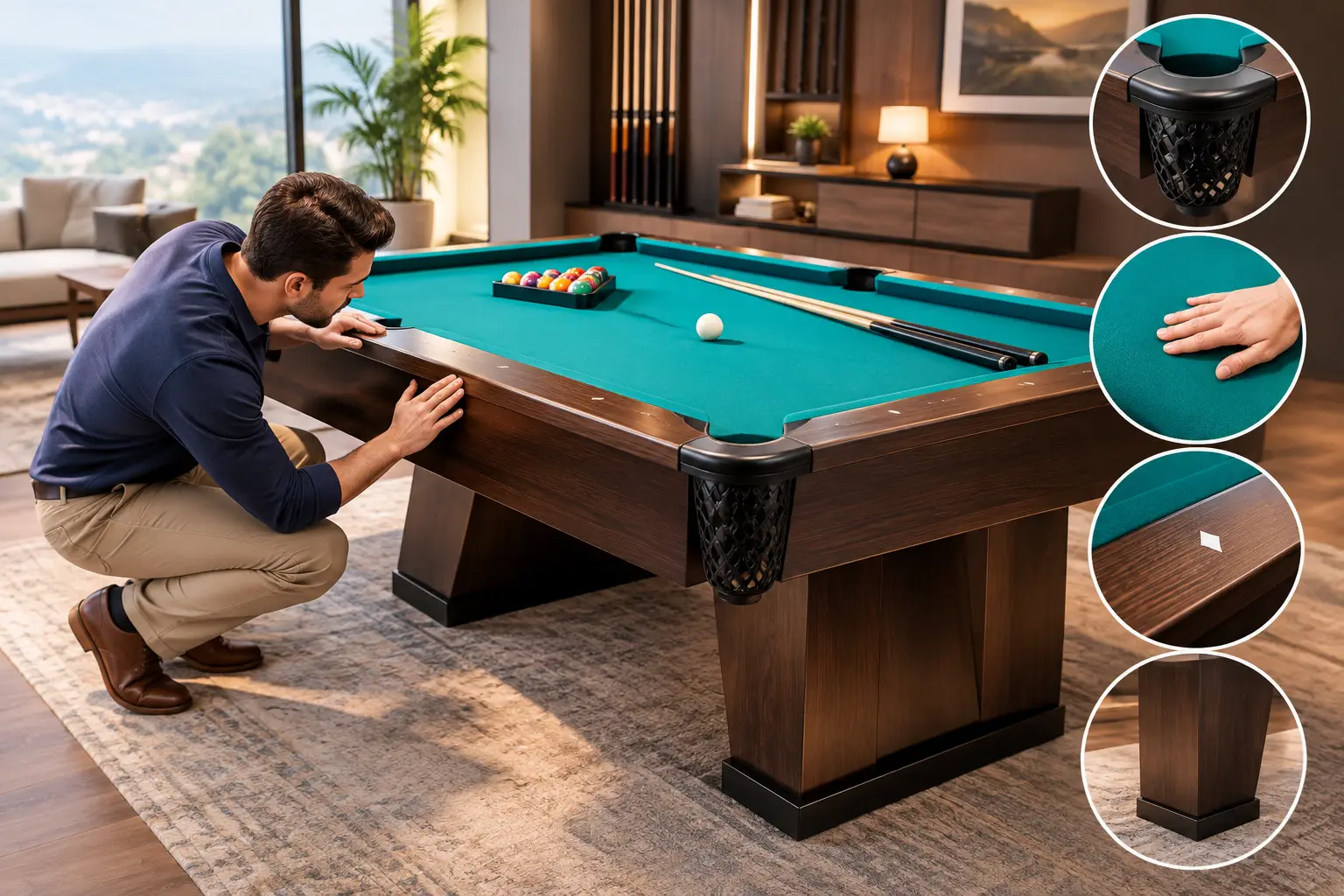
A used pool table can be one of the best values in a home game room - or an expensive project disguised as a bargain. A seller may call a table “perfect” because it looks clean in a basement, but what to check before buying a used pool table goes far beyond the finish on the cabinet or whether it comes with a few cues. The parts that determine how it plays and whether it can be moved safely are often the parts you cannot judge from a quick photo.
Before you agree on a price, inspect the table in person if possible. Plan for the cost of professional disassembly, transport, assembly, and precision leveling as part of the purchase, not as an afterthought. A well-built table with worn cloth can be a smart buy. A table with damaged slate, failed cushions, or a weakened frame may not be.
What to Check Before Buying a Used Pool Table
Start by asking the seller for the table’s brand, model, age, size, and current location. Those details tell you much more than an online listing that simply says “pool table.” Ask whether the table is slate or non-slate, whether it has ever been moved, and whether any repairs have been made to the rails, pockets, frame, or playing surface.
A standard 7-foot, 8-foot, or 9-foot table with a solid slate bed is usually worth closer consideration than a lightweight furniture-style table. That does not mean every slate table is automatically a good purchase. It does mean it has the foundation for accurate play when the structure is sound and the table is properly installed.
Confirm the Table Has a Slate Playing Surface
Slate is the material used on most quality billiard tables because it is stable, flat, and capable of being leveled precisely. Look underneath the table if the seller allows it. On many tables, you can see the slate through the frame or identify it by the substantial weight and construction.
Ask how many pieces of slate the table has. Three-piece slate is common on better home tables and is practical for moving because each section can be handled separately. One-piece slate can also play very well, but it is more difficult to move through narrow stairs, turns, and finished spaces. Either type needs careful handling. Slate is strong, but it can crack, chip at an edge, or develop problems around a seam when moved improperly.
Do not rely on a seller saying the table is “heavy.” Some non-slate tables are heavy too. If the table uses particleboard, MDF, or another composite bed, understand the trade-off. It may cost less and fit a casual setup, but it does not offer the same long-term stability or leveling potential as slate.
Inspect for Cracks, Chips, and Uneven Seams
Remove or lift a corner of the cloth only if the seller is comfortable with it and doing so will not damage the material. You are looking for cracks in the slate, chipped edges, loose shims, or a seam that has opened. A small chip at an outer edge may be repairable, depending on its location. A crack through the playing area is a much more serious concern.
Roll several balls slowly across the table in different directions. Watch for a ball that consistently pulls, hops, or changes direction at the same point. One test is not definitive, since an old table may simply be out of level. Still, unusual ball movement can point to a slate issue, a failed seam repair, or a frame that is no longer supporting the bed correctly.
A table that is merely unlevel is not necessarily a bad table. It may have settled, been assembled without precision leveling, or been moved by someone unfamiliar with slate construction. The question is whether the structure is sound enough to level correctly after relocation.
Look Under the Table, Not Just at the Finish
The cabinet can hide the condition that matters most. Get down low and inspect the legs, cross beams, slate supports, and hardware. Look for water staining, swollen wood, insect damage, cracked brackets, missing bolts, or makeshift repairs. Basements and garages can be hard on billiard equipment, especially when humidity or a past leak has affected the table.
Give the frame a careful visual check for sagging. On a quality table, the slate should be supported by a substantial frame, not simply resting on a thin cabinet. If the table has been sitting on an uneven floor for years, it may be out of adjustment, but the frame should still appear straight and firmly connected.
Check the legs individually. A loose leg can sometimes be corrected during setup, while stripped mounting points or broken structural joints require a more involved repair. Cosmetic scratches and faded finish are usually manageable. Structural damage changes the value of the table.
Test the Rails and Cushions
The rails are where a table reveals its playing condition. Press a ball firmly but not violently into each cushion and compare the response. Then shoot balls off each rail at a moderate speed. The rebound should feel consistent from one side to the next.
Old cushion rubber can harden, dry out, separate from the rail, or lose its liveliness. If a ball dies against a rail, rebounds unevenly, or sounds unusually hollow, the cushions may need replacement. That is a repairable issue, and replacing cushions can significantly improve a good table. It should simply be reflected in the price you are willing to pay.
Inspect the rail tops for warping and the rail bolts for missing parts or stripped threads. Also check the pockets. Leather pockets may show expected wear, but torn nets, broken irons, or loose mounting hardware are worth noting. Pocket work can be handled during restoration, but it adds to the scope.
Treat Cloth as a Service Item
Do not let stained, faded, or worn cloth scare you away from an otherwise solid table. Cloth is meant to be replaced. In fact, a used table is often the right time to choose a new color and have the surface recovered during professional installation.
What matters is whether the cloth is hiding an underlying issue. Look for deep tears, burn marks, moisture damage, or heavy wear along the rail edges. A few thin spots may only confirm that the table has been played regularly. Rippling cloth, raised seams, or bumps under the surface deserve a closer look because they may indicate a problem below the fabric.
Measure the Table and the Room Before You Commit
A table that fits in the seller’s room may not fit in yours. Measure the outside dimensions of the table, then measure your intended room with cues in mind. A pool table needs open space around all sides for a comfortable stroke, not just enough floor space to place the cabinet.
For a typical 58-inch cue, an 8-foot table generally needs a room close to 14 by 18 feet for full clearance. A smaller room can still work with shorter cues in tight areas, but that is a compromise worth deciding on before the table arrives. Doorways, stairwells, ceiling height, turns in hallways, and the final room’s floor condition all affect whether the move is straightforward.
Take photos of access points and note tight turns. Slate tables are not safely moved as a single assembled unit. They must be carefully disassembled, protected, transported, reassembled, and leveled. Trying to slide, tip, or carry an assembled slate table can damage the slate, pull the frame out of square, and create a much larger repair bill.
Price the Complete Project, Not Just the Table
The purchase price is only one part of the decision. Ask yourself what the table needs immediately: moving, installation, new cloth, cushion replacement, pocket repair, rail work, or restoration. A free table can cost more than a fairly priced table in good condition once those needs are added.
This does not mean you should avoid a table that needs work. A well-made older table with solid slate and a strong frame can be worth restoring, especially if its style suits your home. On the other hand, a low-priced table with questionable slate, water damage, and dead cushions may not be a practical investment.
If you are unsure about condition, get clear photos of the underside, rails, pockets, and playing surface before arranging pickup. A professional can often help you understand the likely scope of the move and setup from those details. TableSmith Installations handles the careful relocation, repair, refelting, and precision leveling that lets a worthwhile used table play the way it should.
The right used pool table is not the one with the lowest asking price. It is the one with sound bones, a realistic setup plan, and enough value left after service to give your family years of good games.