
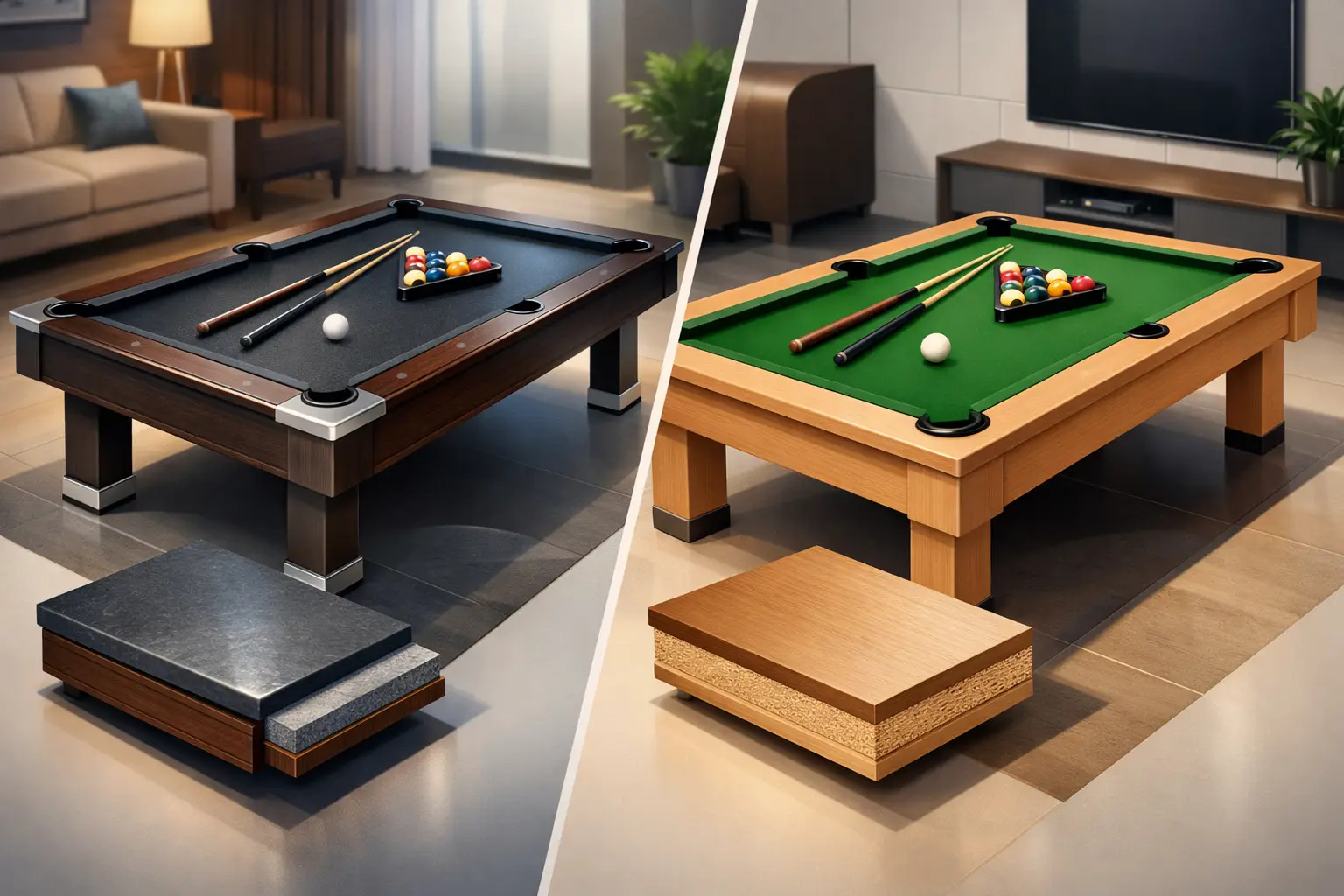
A pool table can look great in a listing photo and still disappoint once the balls start rolling. That is why the choice between slate versus MDF pool tables deserves more attention than finish color, pocket style, or included cues. The bed beneath the cloth determines how accurately the table plays, how long it stays level, what it can tolerate during a move, and whether it is worth restoring years from now.
For many Hudson Valley homeowners, the right choice comes down to how the table will be used. A casual family game room may have different needs than a space built for regular practice. Budget, room location, humidity, floor strength, and the likelihood of moving the table all matter.
Slate Versus MDF Pool Tables: The Fundamental Difference
Slate is a dense natural stone cut into a flat playing surface. In most quality home tables, the slate is covered with a backing material that allows cloth to be secured and is supported by a substantial cabinet and frame. Larger tables often use three separate pieces of slate, which are joined, leveled, and sealed during installation.
MDF stands for medium-density fiberboard. It is an engineered wood product made from compressed wood fibers and resin. MDF pool tables are commonly lighter, less expensive, and easier to package for retail sale. They may be marketed as billiard tables, game tables, or combination tables, depending on their design.
Both can provide entertainment. They are not, however, built to deliver the same playing experience or long-term service life. A properly installed slate table offers a stable, highly accurate surface. An MDF table is generally a budget-conscious option for lighter use, but it is more vulnerable to changes in moisture and temperature.
How the Playing Surface Changes the Game
The most noticeable difference is ball roll. Slate is rigid and remains flat when properly supported. Once the seams on a multi-piece slate table are filled and the surface is precision leveled, a slow-moving ball should hold its line rather than drift toward a low spot. That consistency affects every shot, especially straight-in shots, soft speed control, and bank angles.
MDF starts flat when it is new, but it can gradually sag, swell, or warp. A basement with damp conditions, a garage conversion, or a room with big seasonal humidity swings can speed up that process. Even a small change in the bed can make a table feel unpredictable. Players may blame their stroke when the real issue is the surface underneath the cloth.
Rails matter as well. A good slate table usually has a stronger rail attachment system, allowing the rails to be pulled down firmly and aligned correctly. That supports more consistent rebound and pocket geometry. MDF models vary widely. Some are perfectly fine for casual play, while lower-cost tables may develop loose hardware, uneven rails, or less reliable cushion response over time.
A slate table will not automatically play perfectly just because it is slate. Improper assembly, worn cushions, loose rail bolts, damaged backing, or rushed leveling can compromise an otherwise excellent table. The material creates the potential for better play. Skilled setup is what realizes it.
Weight, Installation, and Moving Reality
A slate pool table is heavy because its playing surface is stone. Depending on size and construction, it may weigh several hundred pounds to well over 1,000 pounds. That weight is part of what makes the table stable, but it also means a slate table should not be dragged across a room, tipped onto its side, or carried intact through a house.
Professional pool table relocation services begin with disassembly. The rails, cloth, slate, frame components, and hardware are handled separately, protected for transport, and reassembled in the new location. During setup, the frame must be made structurally sound before the slate is positioned. The slate is then leveled carefully, seams are prepared, rails are installed tightly, and cloth is fitted correctly.
MDF tables are often lighter and may seem more convenient to move. That can be true, especially for smaller models. Still, lighter does not mean risk-free. An MDF bed can crack at a fastener point, chip along an edge, or flex if it is lifted incorrectly. If the table has folding legs or a combination-top design, its hardware also needs to be checked before it is put back into use.
For either type, measure the path before delivery or relocation. Doorways, turns, stairways, finished walls, and flooring protection are part of the job. The question is not just whether a table fits in the room. It is whether it can get there safely and be assembled on a floor that supports it properly.
Cost Is More Than the Purchase Price
MDF tables usually cost less up front. For someone who wants an occasional family activity and does not expect tournament-style performance, that savings can be reasonable. A basic MDF table can make sense in a dry, climate-controlled space where expectations are modest and the table is unlikely to be moved often.
Slate tables require a larger initial investment, particularly when professional delivery and installation are included. Yet many used slate tables hold practical value because the slate itself can last for decades. Cloth can be replaced, cushions can be renewed, pockets can be repaired, and a worn cabinet can often be restored. A well-built older table may be a better long-term purchase than a new, lower-cost MDF model.
When comparing prices, account for the whole project: transport, installation, leveling, new cloth if needed, cushion condition, missing hardware, and any structural repair. A bargain table is not always a bargain if it needs extensive work before it plays correctly. On the other hand, an older slate table with solid rails and undamaged slate can be an excellent candidate for restoration.
Durability and Room Conditions
Slate does not absorb humidity the way MDF does, which gives it a major advantage in homes with changing indoor conditions. It can still be damaged. Slate can crack if dropped, struck hard at an unsupported point, or transported poorly. The cabinet can loosen, wood parts can dry out or swell, and cloth can wear. But the slate bed itself is usually the most durable component of the table.
MDF is more sensitive to water exposure. A small roof leak, damp concrete floor, or persistent basement moisture can cause swelling that cannot be sanded or leveled away. Once an MDF bed warps, replacement is often more realistic than repair. That is a key consideration for homeowners planning a game room in a lower level or seasonal property.
Before choosing either table, consider the room itself. A stable, dry, finished room is the best environment. Keep the table away from direct moisture, protect it during renovations, and maintain reasonable humidity. If your home has an uneven floor, that does not rule out a slate table, but it makes careful leveling even more important.
Which Pool Table Is Right for You?
Choose slate if you care about dependable ball roll, plan to play regularly, want a table that can be refelted or restored, or are buying a table intended to remain part of your home for years. It is also the stronger choice for a serious recreational player who wants practice to feel consistent from one session to the next.
Choose MDF if the budget is tight, the table will see occasional light use, and the room is dry and stable. It can be a sensible starter table, especially when its limits are understood. Avoid treating it like a permanent heirloom piece or assuming it will handle repeated moves without consequence.
There is also a middle ground: a used slate table. Buyers often find attractive local options, but they should inspect the slate, frame, rails, cushions, legs, and hardware before committing. Ask whether the table has been moved, whether the slate has ever cracked, and whether all parts are present. A proper inspection can prevent a difficult surprise on installation day.
Make the Table Play Like It Should
The best material cannot compensate for careless setup. Whether you choose a new slate table, relocate a family table, or purchase a used one, plan for installation that protects the equipment and the playing surface. TableSmith Installations handles the work with the same focus that owners bring to choosing their table: secure transport, precise leveling, tight rail installation, and a finished result that plays true.
A pool table should invite people to play, not make them work around drifting balls, loose rails, or a surface that never feels right. Choose the construction that fits your room and budget, then give it the careful setup that lets every game start on level ground.