
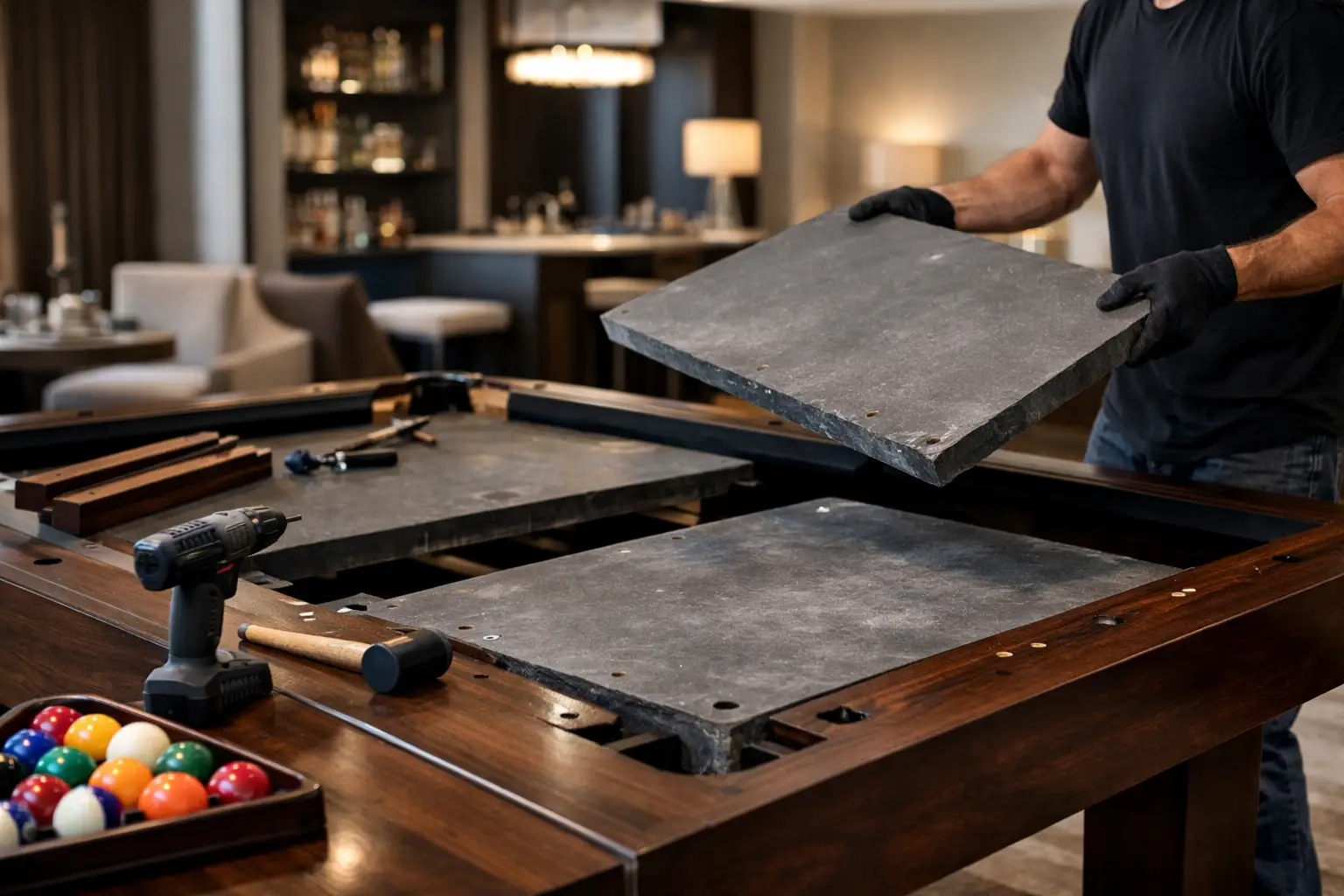
A pool table may look like one solid piece of furniture, but its performance depends on a collection of precisely fitted parts. The slate, rails, cushions, frame, hardware, and cloth all have a job to do. Pool table disassembly is the point where those components need to be separated carefully enough that they can return to the room without damage, missing hardware, or a disappointing playing surface.
For a homeowner moving across town, renovating a game room, or buying a used table, the goal is not simply getting the table through a doorway. The goal is preserving the table so it can be set up level, tight, and ready to play the way it should.
Why Pool Table Disassembly Is Not a Standard Move
Most quality home pool tables cannot be safely relocated as assembled units. Even smaller tables are heavy, awkward, and vulnerable to twisting when lifted. A slate table adds another concern: the playing surface may be made from one, two, or three pieces of slate, each of which is extremely heavy and can crack if it is lifted improperly, dropped, or stressed against the frame.
The frame is not just a stand beneath the table. It supports the slate and helps determine whether the finished table remains stable over time. Pulling a table through a house, down stairs, or onto a truck while it is still built can damage the cabinet, loosen joints, bend leg hardware, and put pressure on the slate seams.
There are exceptions. Some lightweight recreational tables use manufactured bed materials rather than slate, and certain small models may be designed to move in larger sections. Even then, the route matters. Tight turns, staircases, low ceilings, and uneven outdoor paths can turn a simple-looking move into a risky one.
What Professional Pool Table Disassembly Involves
A proper teardown follows the table's construction rather than forcing parts apart. The exact order changes by manufacturer and table style, but the process generally begins with assessing the table, the condition of its cloth, and the path out of the home.
Removing Rails, Pockets, and Hardware
The rails are unbolted from below and lifted away without pulling on the cloth or stressing the cushion facings. Pocket components and rail hardware are kept organized so the right pieces return to the right locations during installation. This matters more than many people expect. A missing bolt, stripped nut, or mismatched bracket can delay reassembly or affect how securely the rails sit.
The rails also deserve close inspection while they are off. Loose rail bolts, worn pocket liners, damaged leather, or hardened cushion rubber may be easier to identify at this stage. If a table has dead rails or inconsistent rebound, moving day can be a practical time to address the issue rather than reinstalling known problems.
Removing or Replacing the Cloth
Pool table cloth is typically stapled or glued beneath the slate. If the existing cloth is in excellent condition and the table is only being moved a short distance, it may sometimes be removed and reused. That decision depends on the fabric, its age, how tightly it was installed, and whether it can come off cleanly.
In many cases, new cloth is the better value. Older material can show faded areas, worn spots near the break end, staple marks, or stretching that becomes more noticeable after reinstallation. Refelting during a move also avoids paying to disassemble the table twice. The best choice depends on the condition of the cloth and how much the owner cares about speed, color, and long-term playability.
Lifting the Slate Safely
Once the cloth is removed, the slate fasteners can be accessed. Slate sections are carefully lifted from the frame and protected for transport. This is one of the most demanding parts of the job because slate is both heavy and brittle. A three-piece slate table can involve individual sections weighing well over 150 pounds each, depending on the table size and slate thickness.
Slate should be carried upright with the proper support and padding, not laid carelessly beneath other household items. The goal is to prevent chipping along the edges, cracking at a pocket cutout, or damage to the machined playing surface. A minor chip may be repairable. A cracked slate can be expensive to replace and may never produce the same dependable result.
Breaking Down the Cabinet and Base
With the slate removed, the cabinet, legs, cross members, and any decorative components can be disassembled as needed for the route. Some tables have straightforward bolted legs; others use more complex construction, ornate trim, or heavy pedestal bases. Protecting finished wood, veneer, and carved details is part of the work.
Each piece should be wrapped and loaded with its weight and finish in mind. A pool table is not protected simply because it is on a moving truck. Its components need to be secured so they cannot shift, rub, or carry the weight of unrelated furniture.
The Move Is Only Half the Job
A table can survive transport and still play poorly if it is reassembled without precision. This is why pool table relocation services should be evaluated as a complete process, not just a pickup and delivery.
At the new location, the frame must be assembled square and stable before the slate goes back on. The slate sections are positioned, joined, and leveled using shims and careful adjustment. Seams are filled and smoothed so they do not telegraph through the cloth or interfere with a rolling ball.
True leveling is more than setting a basic level on the table once. A quality setup checks multiple directions across the bed and considers how the table responds to actual ball movement. Floors settle, rooms are rarely perfectly flat, and a table that looks level can still roll off in a corner or along a seam. Precision craftsmanship shows up in the shot that tracks straight, not just in the appearance of the finished room.
Once the cloth is installed, the rails are tightened evenly and pockets are aligned. Rail installation affects cushion response, pocket geometry, and the solid feel players notice at every shot. A table should not merely look reassembled. It should play like a properly built billiard table.
Common Problems Caused by Rushed Teardowns
The most expensive moving mistakes often begin with good intentions. Homeowners may try to carry the table intact, movers may remove the legs but leave the slate on the cabinet, or hardware may be tossed into a loose box. Those shortcuts can create damage that is not obvious until the table is rebuilt.
Four problems come up repeatedly:
Cracked or chipped slate caused by lifting, stacking, or transporting it without proper support.
Damaged rails and cushions caused by forcing hardware, overtightening bolts, or scraping finished wood.
Lost fasteners and mismatched parts that make secure reassembly difficult.
Uneven play caused by an unstable frame, poor slate seam work, or incomplete leveling.
There is also the issue of personal safety. Slate, cabinets, and rails are heavy in ways that are difficult to manage in narrow residential spaces. Stairs, wet walkways, and tight landings add real risk. Professional handling is often less about making the work look easy and more about preventing the one bad lift that damages the table or injures someone.
When to Schedule Disassembly and Refelting Together
If a move is already planned, it is worth deciding early whether the table needs new cloth, cushions, pocket work, or restoration. A table that has been in the same room for years may have sun fading, worn cloth, loose rails, or slow cushion rubber that an owner has learned to live with. Once it is apart, those problems are easier to evaluate and address.
This does not mean every move requires a full restoration. A newer table with clean cloth and lively cushions may only need careful transport, professional assembly, and accurate leveling. But if the cloth is worn or the rails feel inconsistent, combining services can be more efficient than rebuilding the table now and taking it apart again soon.
For Hudson Valley homeowners, a local specialist can also assess access before the appointment. A quick look at stairways, turns, parking, and the destination room helps establish the right plan and avoids surprises on moving day.
Protect the Table You Chose
A pool table becomes part of a home because people expect to use it for years. It is where families play after dinner, friends gather on weekends, and serious players work on the same shot until it finally falls. That is worth protecting.
TableSmith Installations approaches every teardown with the next installation in mind: organized parts, protected slate, careful transport, tight rail work, and a playing surface that rolls true when the job is complete. If your table needs to move, be refelted, repaired, or set up after a purchase, schedule the work with someone who treats its performance as carefully as its appearance.