
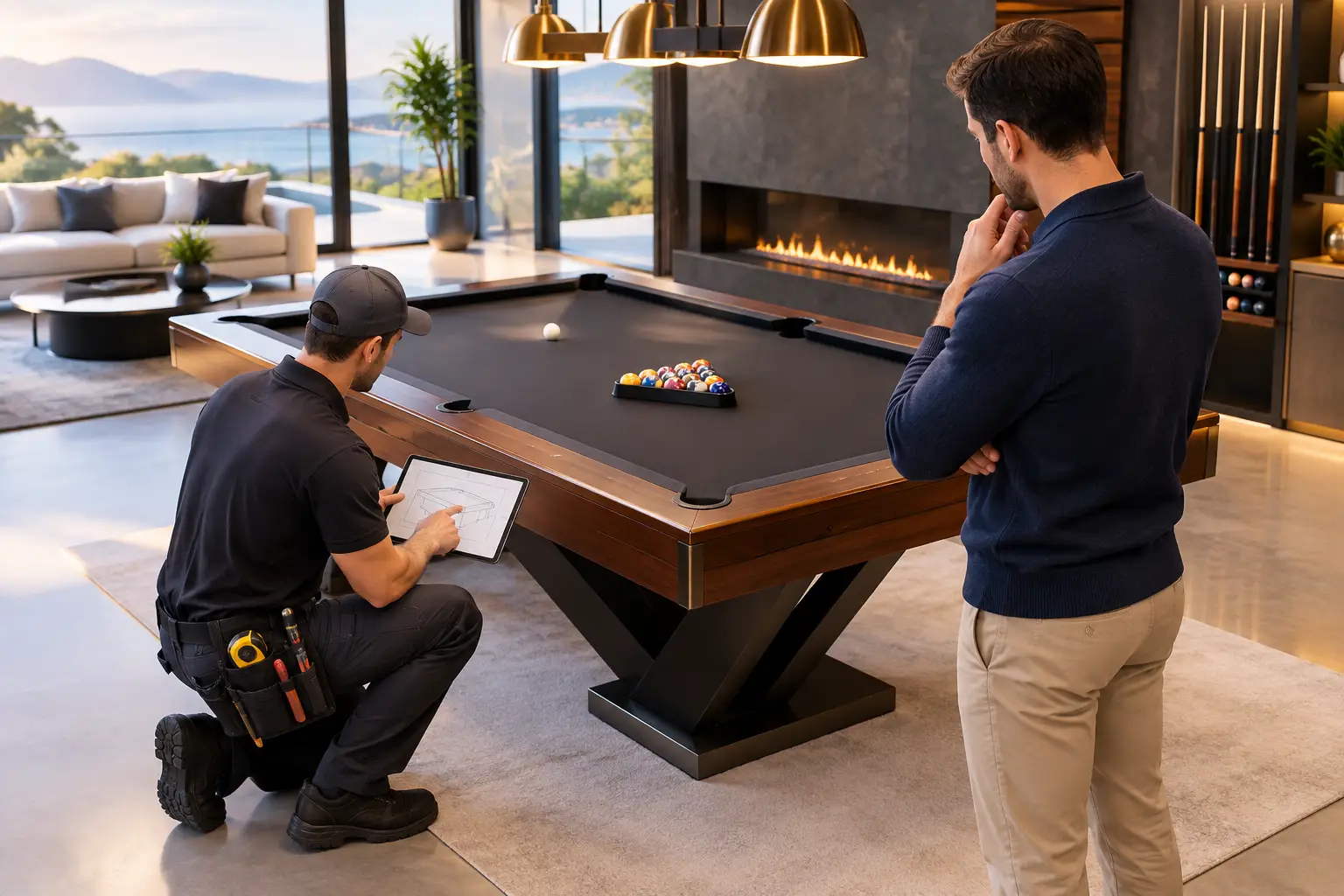
A pool table can look perfectly assembled and still play poorly. A slate seam that was not prepared correctly, a frame that was not supported, or rails tightened without care can leave you chasing balls that drift, rattle, or roll differently from one end of the table to the other. That is why an installer selection guide for pool tables should focus on workmanship, not just who can get the job done fastest.
Pool tables are not ordinary furniture. Even a home table has heavy components, sensitive rail hardware, cloth that can be damaged during handling, and slate that needs to be supported and leveled as a system. Whether you are moving a table across town, setting up a recent purchase, or restoring a family table, the installer you choose affects its condition and its play.
What a Qualified Pool Table Installer Actually Does
A proper installation begins before the table arrives in the game room. The installer should assess access through doors, stairways, hallways, and turns. This is not just about whether the pieces fit. It is about moving the cabinet, rails, slate, and hardware without chipping finishes, stressing joints, or creating unnecessary risk to the home.
Once the table is in position, the real precision work begins. The frame must be assembled squarely and supported correctly. Each slate piece needs to be placed, joined, and leveled with attention to the entire playing surface, not merely a quick check in one spot. Slate seams must be treated properly before cloth goes on, and the cloth must be stretched evenly so it plays cleanly without wrinkles or loose areas.
Rail installation matters just as much. Poorly seated rails can affect pocket alignment, cushion response, and the feel of every shot. A skilled installer checks the details that determine whether the table feels right after the tools are packed up.
Installer Selection Guide: Questions Worth Asking
The right questions help you separate a pool table specialist from someone who treats the job as a basic furniture assembly task. Start by asking whether the installer regularly handles slate pool tables from disassembly through final leveling. Experience with the complete process matters because problems often begin at teardown and only become obvious once the table is reassembled.
Ask how the table will be protected during a move. A professional should be able to explain how rails, cabinet sections, slate, and hardware are handled and organized. Slate is especially unforgiving. It is heavy, brittle, and expensive to replace. An installer should never suggest moving a slate table fully assembled or cutting corners because the move appears short.
Insurance is another practical question. Accidents are not expected, but working with an insured provider gives homeowners a clearer level of protection when valuable equipment is being carried through their property. It also signals that the provider takes the work seriously.
Finally, ask who will be performing the work. A local specialist who is personally accountable for the installation is often a better fit than an arrangement where the person quoting the job is disconnected from the crew arriving at your home. You should know who is handling your table and be able to discuss the scope of work directly.
Look Beyond the Lowest Quote
Price matters, but an unusually low quote can leave out the very steps that protect your table. One estimate may include careful disassembly, transport preparation, slate leveling, seam work, rail installation, and cloth installation. Another may cover only moving pieces from one location to another, with critical finishing work treated as an extra charge or skipped altogether.
Compare what is included, not just the final number. If you are having cloth replaced, confirm whether the quoted price includes removing the old cloth, preparing the slate, installing the new material, and reinstalling the rails. If cushions are worn, ask whether the installer can assess the rubber before the table is put back together. It is much easier to address deteriorated cushions during service than to take the table apart again shortly afterward.
There are situations where a simple setup is appropriate. A newer table that was carefully disassembled and stored properly may need less corrective work than an older table with a warped cabinet, damaged rails, or unknown moving history. The installer should be willing to explain that difference rather than sell the same package for every table.
Pay Attention to Leveling Standards
“Level” can mean different things depending on who is doing the work. Setting a carpenter's level on the slate and making a few adjustments is not the same as precision leveling a playing surface. A pool table needs to be checked across multiple directions and areas so the slate pieces work together as one true bed.
The room itself can create challenges. Floors may settle, carpeting may compress, and older homes may have noticeable variations. These conditions do not automatically prevent a good installation, but they require patience and proper adjustment. The goal is not to make the cabinet look level against a wall. The goal is to create a playing surface where the balls roll true.
If you care about accurate play, ask the installer how they verify the final level. The answer should involve more than a quick visual inspection. You are paying for the table to perform well, not simply to look finished.
Choose a Provider Who Can Handle the Table's Condition
Many owners call for installation and discover that the table needs more attention than expected. Cloth may be faded, stained, torn, or stretched thin. Cushion rubber can harden with age, causing a dull bounce and inconsistent response. Rail facings may be worn, pockets may need adjustment, and the cabinet may show damage from previous moves.
A capable specialist can identify these concerns without pressuring you into unnecessary work. Sometimes a table only needs careful reassembly and leveling. Other times, new cloth, cushion replacement, rail repair, or structural restoration will protect the table and improve how it plays. The best recommendation is specific to the table's age, construction, condition, and how you use it.
This is especially valuable for used-table buyers. A table that looks attractive in an online listing can hide issues beneath the cloth or inside the rail assembly. Before you commit to moving it, get clear information about the slate, frame, cushions, and access conditions at both locations. A good installer can help you understand what you are taking on.
Watch for Warning Signs Before Booking
Be cautious when a provider cannot explain their process, avoids discussing insurance, or promises a very fast installation without asking about table size, slate type, stairs, or room access. Those details change the scope of the work. A careful professional will ask questions because they are planning for a safe move and accurate setup.
You should also be wary of anyone who recommends transporting a slate table in one piece, cannot describe how slate seams are addressed, or treats leveling as an afterthought. These are not small details. They are central to the table's durability and performance.
Clear communication is a positive sign. You should receive a straightforward understanding of what will be done, what the table may need, and what factors could affect the appointment. For homeowners throughout the Northeast, TableSmith Installations approaches the work as precision craftsmanship: protect the equipment, set it up correctly, and leave it ready to play.
Prepare Your Game Room for Better Results
The installer has responsibility for the technical work, but a little preparation makes the appointment easier. Clear a path from the entry to the game room, remove fragile items near the work area, and make sure there is enough open space around the future table location. If you are unsure whether the room has enough playing clearance, measure not only the table footprint but also the cue space around every side.
Tell the installer about stairs, narrow landings, low ceilings, recent flooring, or renovations before the appointment. Photos can help clarify access challenges. This avoids surprises and allows the work to be planned properly.
A well-installed pool table should feel settled, solid, and dependable each time you play. Choose the person who is prepared to earn that result through careful handling, accurate leveling, and respect for the table you brought into your home.