
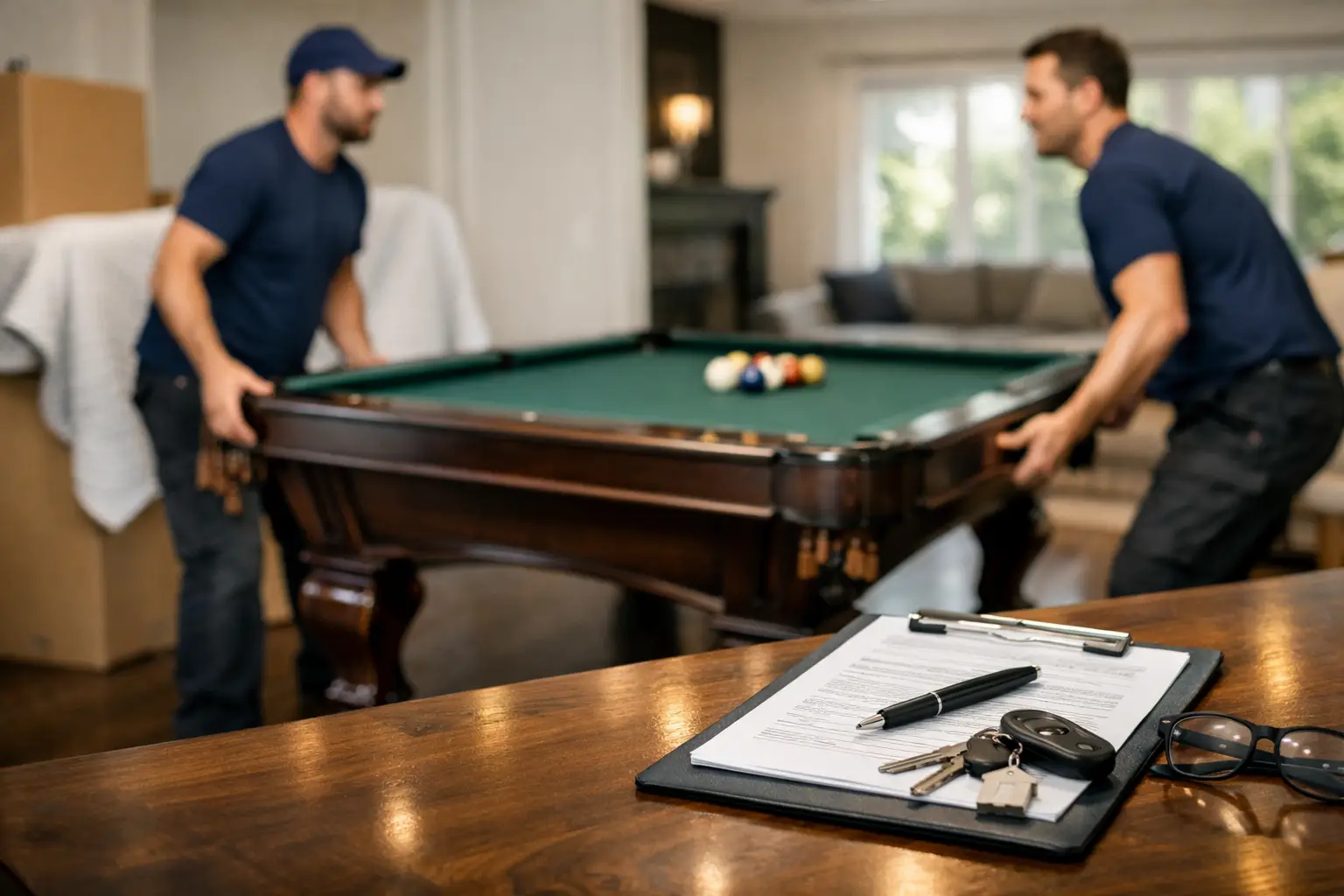
A pool table can look like one solid piece of furniture until it has to pass through a doorway, go down a staircase, or ride in a truck. Then the slate, frame, rails, pockets, and hardware all become separate risks. So, are pool table movers insured? A qualified professional should be, but that does not mean every mover carries the same coverage or that every type of damage is automatically covered.
Before you book a relocation, ask direct questions about insurance and get the answers in writing. The right protection matters, but so does the skill to avoid a claim in the first place. A slate table is precision equipment. It needs careful disassembly, secure transport, correct reassembly, and leveling that brings the table back to true play.
Are Pool Table Movers Insured for Every Type of Damage?
Insurance is not one blanket promise. A company may be insured and still have limits, exclusions, deductibles, or coverage that does not apply to a particular circumstance. That is why “yes, we are insured” should be the start of the conversation, not the end of it.
For a residential pool table move, there are three coverage areas worth asking about: general liability, cargo or transit coverage, and workers’ compensation. General liability may help if the crew damages your home, such as a wall, floor, stair rail, or doorway. Cargo or transit coverage concerns the table while it is being transported. Workers’ compensation protects the people doing the work if they are injured on your property.
Not every business uses the same policy language, and coverage requirements vary by insurer and location. Ask the mover what coverage they carry, whether it applies to pool table relocation, and whether there are any limits on the value of the item being moved. If your table is antique, heavily restored, custom-built, or especially valuable, tell them before the appointment. A standard coverage limit may not reflect the replacement value of a rare table or a three-piece slate set.
A specialist should be comfortable answering these questions plainly. If the response is vague, rushed, or limited to “don’t worry about it,” that is a reason to pause.
What Insurance Does - and Does Not - Replace
Insurance can help address a financial loss after an accident. It cannot restore the original condition of every component. A cracked slate seam, a warped cabinet, torn rail leather, or damaged vintage inlays may be difficult or impossible to match exactly. Even when a repair is possible, the table may need additional restoration work before it plays and looks the way it should.
That is the trade-off homeowners sometimes miss when comparing a specialist with the lowest-priced moving option. Basic movers may be capable of lifting heavy items, but a pool table requires more than lifting strength. Slate needs support across its surface. Rails and aprons need protection from impacts. Hardware must be labeled and retained. The frame has to be assembled square before the slate is leveled.
Good insurance is responsible business practice. Good workmanship is what keeps a problem from happening.
At TableSmith Installations, fully insured service is paired with hands-on pool table relocation experience, because the job is not finished when the table reaches the new room. It is finished when the slate is properly set, the rails are secure, and the table plays the way it should.
Questions to Ask Before You Schedule a Move
You do not need to become an insurance expert to make a sound decision. A short conversation can reveal whether a company is prepared for the responsibility of moving your table.
Ask whether the business is insured specifically for the work it performs. Ask if the policy covers damage to your property during disassembly, transport, and reassembly. If transport is included, ask how the table is protected in the vehicle and whether coverage applies while it is in transit.
It is also reasonable to ask for proof of insurance or a certificate of insurance when the job is substantial, access is difficult, or the table has significant value. A dependable local service provider will understand why you are asking. You are not being difficult. You are protecting an investment that can cost thousands of dollars to replace, not including installation and restoration.
Finally, ask what the service scope includes. Does the estimate cover disassembly, moving, reassembly, leveling, and new cloth if needed? Will the crew inspect the cushions, slate seams, backing, pockets, and frame while the table is apart? Clear scope matters because it prevents the uncomfortable surprise of discovering that transport was covered in the quote but setup, leveling, or stair work was not.
Why Written Details Matter as Much as Coverage
A written estimate should identify the table, the pickup and delivery locations, and the work to be performed. It should also call out conditions that affect the move, including stairs, tight turns, basement access, elevator use, long carries, or renovation work around the game room.
Photographs are useful before a move, especially for older furniture-style tables. Take clear pictures of the cabinet, rails, legs, pockets, and any existing marks. This is not about expecting damage. It simply gives everyone a shared record of the table’s condition before work begins.
If a table has existing issues, a professional should point them out rather than cover them up with a quick reassembly. Cracked or loose slate backing, brittle pocket leather, weak leg mounts, damaged rail bolts, and worn cushions can affect both safety and play. Sometimes relocation is the right opportunity to repair those issues, replace the cloth, or restore components that have been ignored for years.
Your Homeowners Policy May Not Fill the Gap
Some homeowners assume their own insurance automatically covers any problem involving a move. That can be risky. Personal property coverage, deductibles, exclusions, and claims rules differ widely. A claim on your policy can also have consequences beyond the immediate repair.
You can call your insurance agent before the move if you want clarity, particularly for a high-value table. Still, your policy should not be treated as a substitute for hiring an insured service provider. The mover should stand behind the work they perform and carry appropriate business coverage.
The same principle applies when a general household moving company offers to handle the table. Their insurance may be valid, but that does not automatically mean they have the tools, procedures, or experience needed for slate billiard tables. Ask who will actually disassemble and reinstall it. If they plan to move it as one assembled unit, that should raise concern. Most slate pool tables should be professionally taken apart before relocation.
Signs You Are Hiring a Careful Specialist
A careful pool table mover asks questions before quoting the work. They want to know the table size, whether it is one-piece or three-piece slate, the access conditions, the distance between locations, and the room where the table will be installed. They may ask for photos because a tight staircase or sharp basement turn can change the equipment and labor required.
They should also explain how the table will be handled. That normally means removing rails and cloth as needed, separating the slate, protecting each piece, securing hardware, transporting the components correctly, and rebuilding the table on a sound floor. After assembly, the slate needs precision leveling. The rails need to be tightened evenly, and the cloth needs to be installed with attention to stretch, alignment, and pocket cuts.
This process takes more care than sliding a table across a room. It also creates an opportunity to make the table better than it was before the move. If the old cloth is worn, if the cushions have hardened, or if the table has never rolled true, those problems can be addressed while the table is disassembled.
Protect the Table Before the Truck Arrives
Clear the route through the home, remove fragile wall décor near tight turns, and measure doorways if access looks questionable. Let the mover know about stairs, loose flooring, snow or ice, pets, and any construction that could affect the job. Small details shared early help prevent rushed decisions on moving day.
The right question is not simply whether a mover has insurance. It is whether they combine proper coverage with the knowledge, equipment, and accountability to protect your table from the first bolt removed to the final level check. Before you schedule your move, ask for clear answers, a clear scope, and service from someone prepared to make your table play right in its new home.