
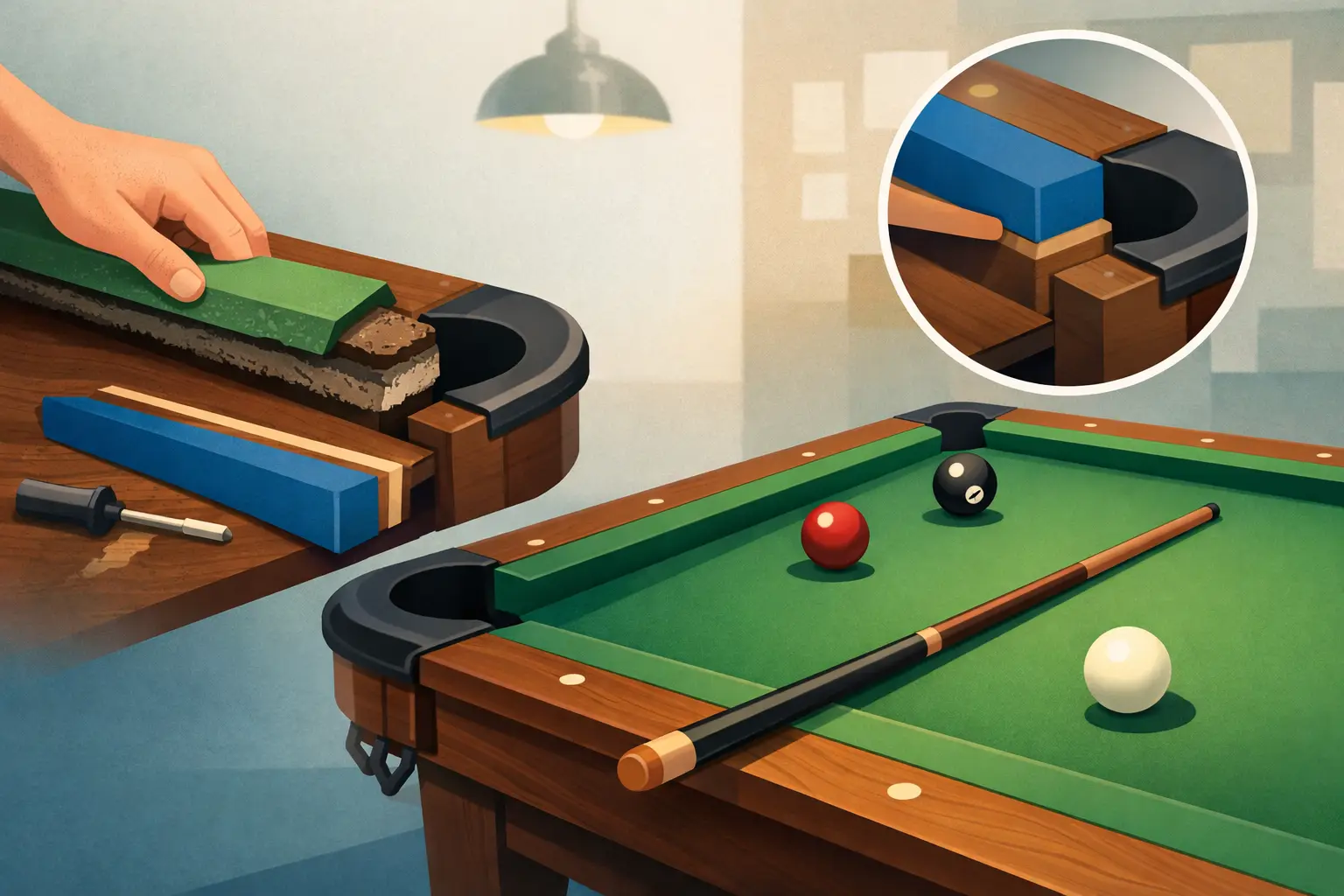
A pool table can look clean, sit level, and still play badly. When a ball dies against the rail, rebounds at an odd angle, or produces a hard wooden knock instead of a controlled response, the problem is often inside the rail. Pool table cushion replacement restores the rubber that creates a predictable rebound, helping your table play the way it was built to play.
For homeowners in the Hudson Valley, this is especially easy to overlook. Cushions are hidden beneath the rail cloth, so wear is not as obvious as a rip in the felt or a visibly uneven table. But the condition of the rubber has a direct effect on every bank shot, safety, and kick. A well-built table deserves more than a cosmetic fix when the rails are no longer doing their job.
What Pool Table Cushions Actually Do
The cushion is the shaped rubber strip attached to the inside edge of each rail. Its profile, mounting position, and firmness determine how a ball contacts the rail and returns to the playing surface. The rubber is covered by rail cloth, but it is the cushion underneath that controls the action.
Good cushions provide a consistent, lively rebound across all six rails. They also help preserve accurate pocket geometry. If the rubber has hardened, loosened, shrunk, or been installed at the wrong height, the table may become frustrating even for casual play. Players often assume their stroke is the issue when the table itself is giving an unreliable response.
Rail work is not simply a matter of gluing on new rubber. Cushion replacement requires the correct profile for the table, careful removal of old material, proper adhesive, accurate facing work near the pockets, and a clean re-covering of the rails. Small errors in any of those areas can change the way the table plays.
Signs Your Cushions Are Worn Out
Age is one clue, but it is not the only one. Rubber breaks down differently depending on the quality of the original cushions, room temperature, humidity, sun exposure, and how long the table has been stored. A table in a dry basement, garage, or unconditioned recreation room may need attention sooner than one in a climate-controlled space.
The clearest sign is a dead rebound. Strike a ball firmly into different points along a rail. If it barely returns, reacts differently from one end to the other, or sounds unusually sharp and hollow, the cushion may have become hard or detached.
Other common signs include balls that rebound at inconsistent angles, rail cloth that looks loose or wrinkled, gaps between the cushion and the rail, or rubber that feels stiff and brittle when inspected during service. Sometimes the cushion has shrunk enough to pull away at a pocket opening, leaving a visible gap. On an older or previously repaired table, a poor prior installation may be the issue rather than the age of the rubber itself.
A single bad rail can affect play, but it is usually wise to evaluate the full set. Replacing one cushion beside five older, hardened ones can leave the table with noticeably uneven action. There are exceptions, such as localized damage from a move or moisture exposure, but the decision should be based on the actual condition of each rail.
Not Every Bad Bank Shot Means Bad Rubber
Before replacing cushions, rule out other setup problems. A table that is out of level can make shots drift and can make rebound patterns seem inconsistent. Loose rail bolts, damaged rail wood, poor pocket facings, or slate seams that have shifted can also interfere with play.
That is why a complete inspection matters. The best repair starts with identifying whether the problem is truly the cushion rubber, the rail assembly, or the table’s overall setup. Replacing rubber without checking rail alignment and level can improve one issue while leaving another behind.
Why Cushion Work Calls for Precision Craftsmanship
A pool table rail is a performance component, not decorative trim. The new rubber must match the rail design and be mounted at the proper height relative to the slate. If it sits too high or too low, the ball can react unnaturally. If the rubber is not bonded evenly, the rebound can vary along the rail.
Pocket areas require equal care. The facings at the ends of the cushions shape the pocket opening and influence whether balls accept cleanly or rattle back onto the table. Oversized, uneven, or poorly cut facings can make a table play too easy, too tight, or simply inconsistent from pocket to pocket.
Rail cloth is also part of the finished result. During professional pool table cushion replacement, the rails are recovered with clean tension and properly finished around the pockets. This is a good time to choose a new cloth color if the existing rail cloth is faded or no longer matches a recently refelted bed.
For tables being restored after purchase, relocation, or years of limited use, cushion replacement is often best handled alongside other work. A professional can assess the frame, rail bolts, pocket hardware, slate condition, cloth, and level while the table is already being serviced. That approach helps avoid repeated disassembly and gives the owner a more complete result.
Choosing the Right Time for Replacement
There is no universal replacement schedule. Some quality cushions remain playable for many years, while others fail early because of inferior material or harsh storage conditions. If the table plays consistently and the rubber remains responsive, replacement may not be necessary simply because of its age.
On the other hand, do not wait until the rails are completely dead. Once rubber becomes severely brittle or starts separating from the wood, the repair can involve more cleanup and added attention to damaged rail surfaces. If you have just bought a used table, moved a table from storage, or noticed that familiar shots no longer react normally, an inspection is worthwhile.
Home renovations can also be a practical time to address rail condition. If a table is being disassembled for new flooring, a basement remodel, or a move to another room, the rails can be evaluated while the table is apart. Afterward, accurate slate leveling and tight rail installation ensure the improved cushions are supported by a sound setup.
What a Professional Repair Should Include
A proper service begins with inspecting the table and confirming the correct cushion profile. The rails are removed carefully, and the old cushion material, adhesive residue, and worn facings are addressed without damaging the rail structure. New cushions are positioned accurately, bonded securely, and trimmed with attention to the full rail length and pocket transitions.
The rails are then covered, reinstalled, and tightened evenly. The table should be checked for rail alignment, secure mounting, and consistent ball response. If the table has been moved or disassembled, the slate should also be leveled after assembly. A table cannot deliver true play if the rails are responsive but the surface is not properly supported and leveled.
This is where experienced local service makes a difference. TableSmith Installations treats cushion work as part of the table’s overall performance, not a quick rail-covering job. The goal is a table that looks refreshed, holds up to regular use, and gives players a dependable response on every side of the table.
Protecting Your Table After the Repair
New cushions benefit from a stable environment. Keep the table away from direct, prolonged sunlight, major swings in temperature, and excess dampness. Avoid storing heavy items on the rails, and do not use the rails as seats or support when standing up. Those habits can stress the rail structure and eventually affect alignment.
Regular brushing and proper cleaning of the cloth help the table stay presentable, but the bigger protection is addressing problems early. A loose rail bolt, a water leak near the table, or a change in rebound is easier to correct before it turns into a larger restoration project.
If your table has started to feel unpredictable, trust what you are seeing on the shots. A careful inspection can tell you whether the cushions need replacement, whether the table needs leveling, or whether a smaller rail repair will restore the game you expect from your own game room.