
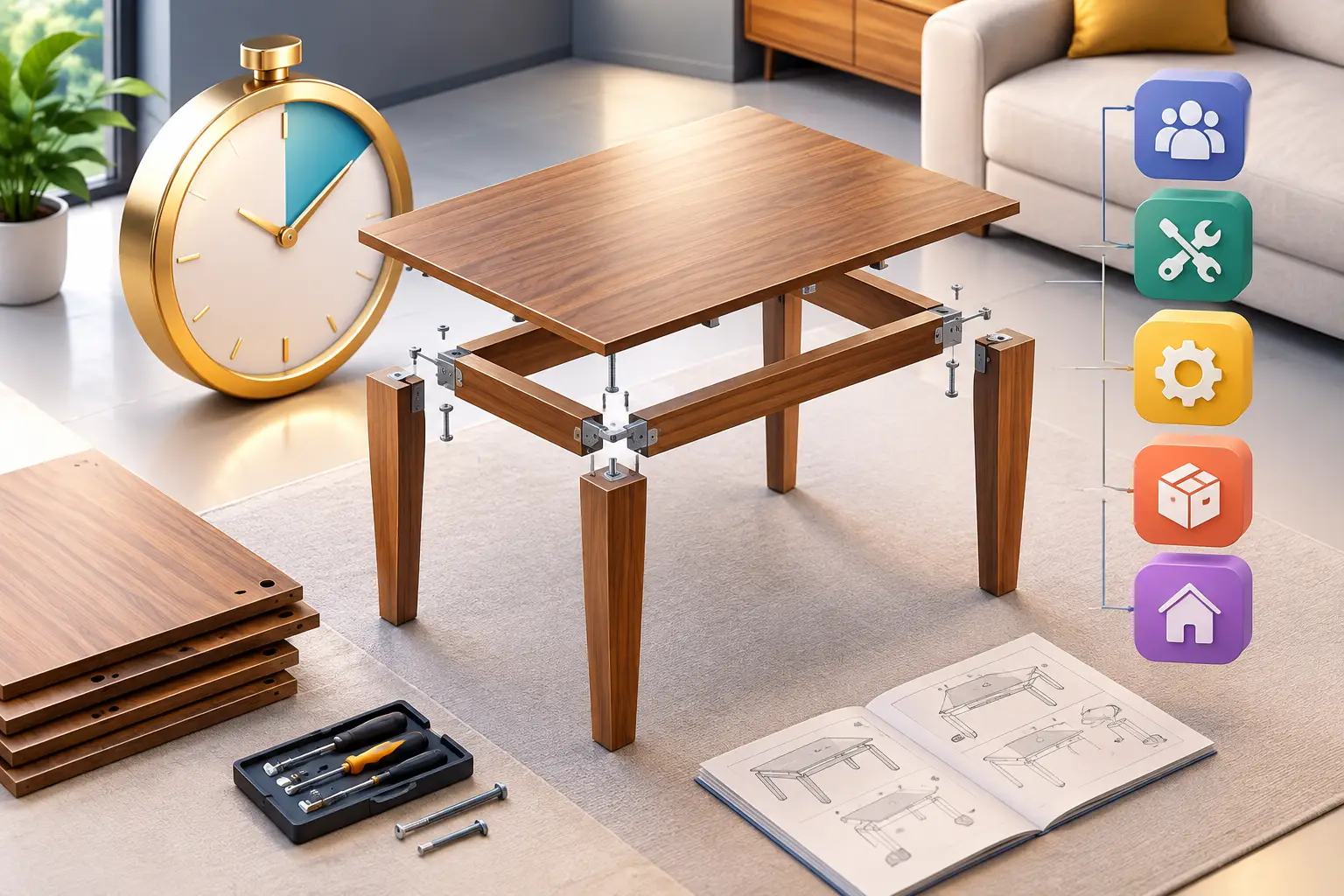
A pool table can look fully assembled long before it is truly ready to play. Table reassembly duration is not simply the time it takes to put legs, rails, and cloth back in place. The work that matters most happens in the details: setting the frame correctly, joining slate without creating ridges, leveling the playing surface, installing rails securely, and confirming that the table rolls true.
For a homeowner planning a move, renovation, or used-table purchase, knowing what affects the timeline makes scheduling easier. It also helps explain why rushing a slate table can create problems that show up every time a ball drifts, rattles in a pocket, or rolls unevenly across the felt.
Typical Table Reassembly Duration
Most standard residential pool table reassemblies take several hours when the table arrives in good condition and the room is ready. A straightforward installation may fit within a half day. More involved work can take most of a day, especially when the table needs new cloth, cushion work, frame repair, or added attention to the slate seams.
The size and construction of the table make a difference. A smaller one-piece slate table may have fewer slate seams to address, but its slate can be extremely heavy and difficult to position. Three-piece slate tables are common in home game rooms and are designed to be disassembled for relocation, yet each piece must be aligned precisely before final leveling begins.
A professional should not promise the same exact time for every table without seeing the model, condition, access route, and requested work. A solid wood antique table with worn hardware has different needs than a newer contemporary table that was recently disassembled. The goal is not to stretch out the appointment. It is to complete the work carefully enough that the table plays the way it should when the job is done.
What Affects Table Reassembly Duration?
The table itself is only part of the schedule. Conditions before and during the appointment can shorten the work or add necessary time.
Slate condition and seam work
Slate is the playing foundation of the table. Once the slate sections are placed on the frame, they must sit correctly against one another and be brought into plane before seams are finished. If the slate was chipped during a move, if prior seam material has failed, or if a section has warped support beneath it, repair and correction take additional time.
A table can appear level from across the room while still having a slight seam ridge that affects a slow-rolling ball. Careful seam preparation and final leveling protect both playability and the cloth installed over the slate.
Room access and table placement
Stairs, narrow turns, finished basements, tight doorways, and long carries all affect the pace of the service. These conditions matter most when slate must be brought into a newly finished game room or repositioned after flooring work. Clear access lets the installer focus on the table rather than work around boxes, furniture, construction materials, or an unfinished path.
The final table location matters, too. A table may need to be shifted slightly so players have enough cue clearance around all sides. It is much easier to make that decision before the slate has been leveled and the rails are installed.
Frame condition and hardware
The cabinet, legs, cross members, bolts, and slate-support structure must be stable before leveling can hold. Loose leg mounts, stripped hardware, cracked wood, or a sagging frame should be addressed instead of hidden under a quick setup.
This is where a reassembly can become repair work. A technician may need to reinforce a structural area, replace hardware, or correct a support issue before the slate can be installed with confidence. That adds time, but it prevents the table from settling out of level shortly after service.
Cloth, cushions, and rail work
If existing cloth is being reused, its condition will affect the process. Cloth that is worn, stretched, stained, or damaged during removal may not provide the result an owner expects after reassembly. New cloth adds installation time, but it also gives the table a clean playing surface and lets the owner choose a color that suits the room.
Rail work can change the schedule as well. The rails need to be fitted tightly and evenly so the pocket openings and cushion response remain consistent. If cushion rubber has hardened, pulled away from the rail, or lost its rebound, replacement is a separate craftsmanship task rather than a quick add-on.
Precision leveling requirements
Leveling is often the reason professional reassembly takes longer than customers expect. The frame must be stable, the slate must be supported correctly, and the entire surface must be checked repeatedly as adjustments are made. A level placed in one spot is not enough. The installer needs to verify the table across its length, width, diagonals, and critical rolling paths.
For casual family play, a table still needs to roll straight. For an owner who notices speed, bank response, and the behavior of a slow cue ball, small inaccuracies become even more noticeable. Precision work takes patience because each adjustment can affect another area of the slate.
How to Prepare for a Faster, Better Appointment
The best way to avoid unnecessary delay is to prepare the room before the installer arrives. The table area should be cleared, with a path wide enough for slate and components to be carried safely. If new flooring, painting, electrical work, or built-in cabinetry is planned, complete that work first whenever possible.
Keep the table's hardware, rails, pockets, legs, and any saved parts together if you have them. Even when replacement hardware is available, original parts can help identify the model and preserve the fit of the table. If you know the table brand, size, or whether it uses one-piece or three-piece slate, share that information when booking.
It also helps to decide in advance whether you want new cloth, cushion replacement, pocket changes, or restoration work. Combining related services into one appointment can be more practical than having the table assembled, then partially disassembled again shortly afterward for a planned upgrade.
Why Quick Assembly Can Cost More Later
A pool table is not ordinary furniture. It is a precision playing surface supported by a cabinet, slate, rails, cushions, and hardware that must work together. When a table is reassembled too quickly, the risks include damaged slate edges, unstable leg support, poor seam finishing, loose rails, torn cloth, and an uneven roll.
Those issues can be frustrating because they are not always visible on installation day. A table may look fine until the seam material settles, a rail bolt loosens, or a ball repeatedly moves off line. Correcting poor work later can require removing cloth, rails, or slate that should have been properly handled the first time.
With TableSmith Installations, the focus is on the finished playing experience, not just getting the table back into the room. A careful reassembly protects the investment you made in the table and gives your game room a surface that feels ready for use rather than merely put back together.
When to Allow Extra Time
Build more flexibility into your schedule if the table is antique, has visible frame damage, was stored in a damp area, has unknown moving history, or is receiving restoration work. The same applies when a move includes difficult stairs or when the game room is still being completed. These are not reasons to avoid service. They are reasons to give the work the time it deserves.
If you are coordinating movers, contractors, flooring installers, or a closing date on a home purchase, schedule the pool table after the room is clean, accessible, and finished. The table should be among the final major pieces placed in the space, not an obstacle for the work that follows.
A well-planned appointment does more than keep table reassembly duration predictable. It gives the installer the clear access and stable environment needed to set the slate accurately, secure the rails, and leave you with a table that invites the next game instead of creating a list of repairs.