
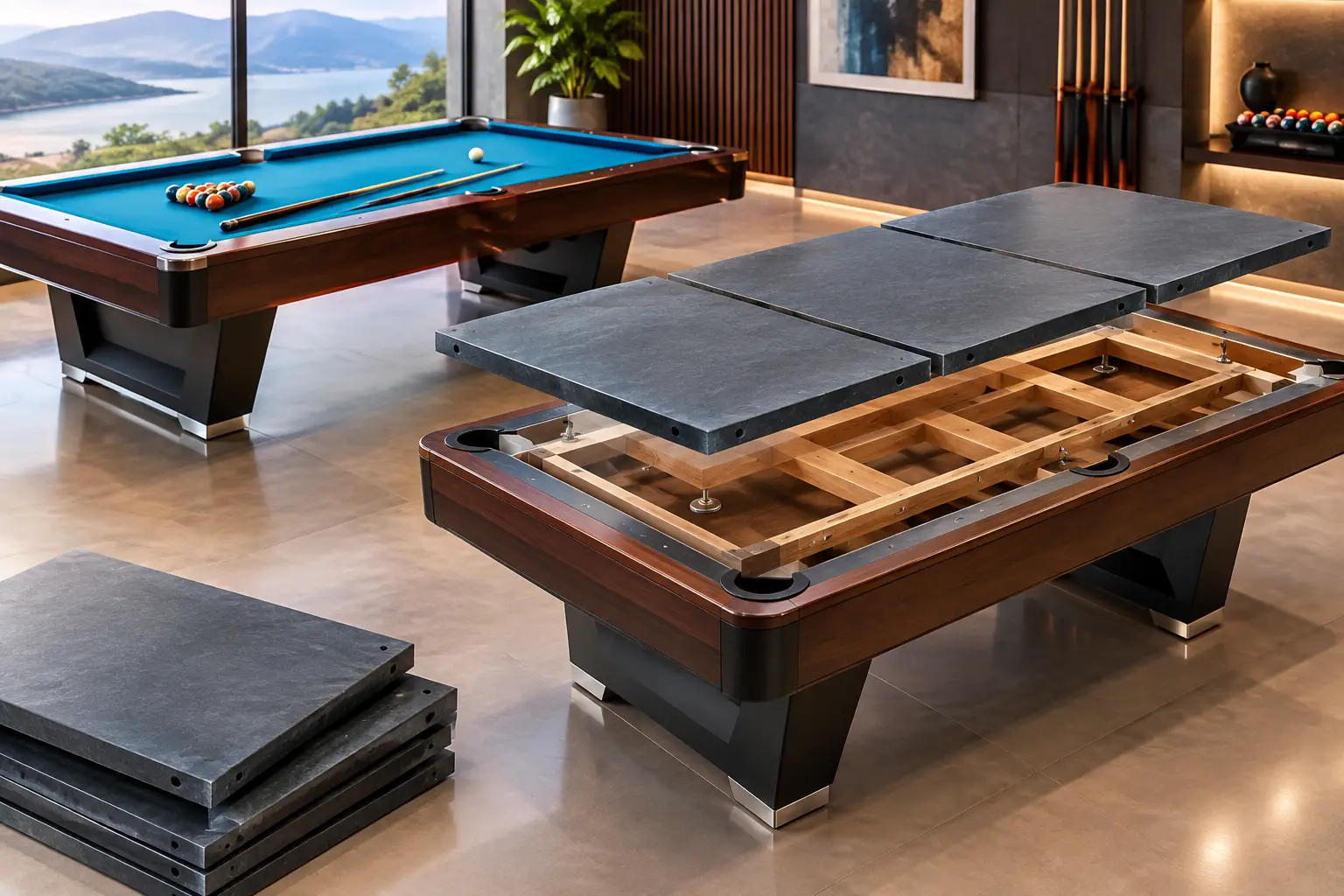
A pool table can look fully assembled and still play poorly. That is the difference these slate installation examples are meant to show: proper setup is not just getting legs, frame, slate, and rails into the same room. It is a sequence of careful decisions that protects a heavy piece of equipment and gives the ball a true, consistent roll.
For homeowners buying a used table, finishing a basement, or moving a family table to a new home, the visible result can be deceiving. Cloth may look smooth while the slate underneath has a low spot. Rails may appear tight while a pocket opening is slightly out of position. A professional installation addresses the parts you cannot judge from across the room.
Slate Installation Examples That Show the Difference
Example 1: Reassembling a three-piece slate table after a move
A typical residential pool table has three individual pieces of slate. Each piece is heavy, brittle at the edges, and designed to rest precisely on the cabinet frame. During a move, the table is disassembled so the frame, rails, slate, and hardware can be carried safely. Reassembly begins with inspecting the frame before any slate is set in place.
The installer checks that the frame is structurally sound, its cross members are properly positioned, and its legs sit firmly on the floor. If a leg is loose or a support is cracked, leveling the slate first would only hide the real problem. The table needs a stable foundation before fine adjustment begins.
Once the slate is placed, the seams are aligned and the sections are leveled as one playing surface. This is not a matter of putting a carpenter's level in the center and calling it finished. The surface must be checked in multiple directions, including along seams and around the perimeter. Small adjustments matter because a ball rolling slowly will expose an uneven table immediately.
The seams are then filled and smoothed so they do not telegraph through the cloth. Fresh felt or another cloth choice is installed only after the slate is stable, flat, and ready. A rushed installation can leave a ridge at a seam or pull cloth over a surface that is not truly level. Those issues affect both appearance and play.
Example 2: Installing a used table in a finished basement
A used pool table can be an excellent value, but its condition should guide the installation plan. In one common situation, a homeowner buys a table that has been stored in a garage or moved several times. The cabinet may have cosmetic wear, the cloth may be tired, and the rubber cushions may no longer respond the way they should.
The right approach is not automatically a full restoration. It depends on how the table will be used and what inspection reveals. If the frame is solid and the slate is intact, the table may only need careful assembly, leveling, and new cloth. If the rail rubber has hardened, balls can rebound weakly or inconsistently even on a perfectly level playing surface. Replacing cushions at installation may make more sense than paying to have the rails removed again later.
This is also a good time to address room conditions. Basements can have concrete floors, uneven finished flooring, and humidity changes that affect the room over time. The installer can compensate for a floor that is not level at the table supports, but the frame still needs proper bearing and stability. A table should not rock when leaned on, and shims should be used thoughtfully rather than as a quick fix for a weak cabinet or damaged leg.
For a homeowner creating a game room, new cloth is often the finishing touch. Color selection changes the look of the room, but cloth quality and installation tension affect how the table performs. A clean, evenly stretched surface gives the table the finished appearance people want and supports accurate play.
Example 3: Setting up a table after new flooring or renovation
A table that was level before a renovation may need to be leveled again after flooring is replaced. New carpet, luxury vinyl plank, tile, or a refinished wood floor can change how the table's legs sit. Even a small change in height or firmness can affect the playing surface.
This situation is often misunderstood because the pool table has not moved far. Homeowners may assume the table only needs to be slid back into place. Sliding risks damaging both the floor and the table, and it does nothing to verify whether the slate remains true. When a room is renovated, disassembly and professional reinstallation protect the table while allowing the finished space to be completed properly.
After the table is returned to position, leveling is performed again on the assembled structure. The rails are installed with attention to fit, bolt tension, and pocket alignment. Rail work has a direct effect on the game. Loose or improperly seated rails can create dead response, inconsistent rebound, or visible gaps where the rail meets the slate.
Example 4: Correcting a table that looks level but rolls off
Sometimes the reason for service is simple: balls drift toward one side of the table. The cause is not always as simple as one low leg. A table can develop problems from settling floors, loosened leg levelers, frame movement, damaged slate seams, or an earlier setup that was never accurately finished.
A careful correction begins with finding the source rather than adding material under a random corner. If the cabinet is stable, the slate can be adjusted to restore a consistent roll. If the frame has shifted or hardware has loosened, that must be corrected before final leveling. If a seam has failed, the surface may need to be opened, repaired, and recovered.
This example is why precise leveling is more than a single service step. It is the final calibration of the entire table. The goal is not merely for a bubble to look centered. The goal is for the table to play the way its design intended, from slow straight shots to bank shots that depend on reliable rails.
What Professional Slate Installation Protects
Slate is durable, but it is not indestructible. Corners can chip during handling, and a slab can crack if it is carried incorrectly or forced onto a warped frame. The cabinet can also be damaged when a table is treated like ordinary furniture. Proper disassembly, packing, transport, and reassembly reduce those risks.
Professional work also protects the playing experience. A pool table is a system: the frame supports the slate, the slate supports the cloth, and the rails define how the ball reacts. If one part is off, the table may still look attractive but feel frustrating to play. That matters whether the table is used for family games on weekends or regular practice.
There is a practical value in having one accountable specialist handle the job from teardown through final setup. At TableSmith Installations, I do not just assemble tables. I inspect the condition of the equipment, address the work that affects performance, and make sure the finished table is ready for the room it is going into.
When Installation Should Include More Than Leveling
Installation is the best opportunity to handle repairs that require access to the slate or rails. Worn cloth, loose pockets, damaged featherstrips, old cushion rubber, and cabinet hardware are easier to address while the table is already apart. Waiting can turn a manageable service visit into another full disassembly later.
That does not mean every table needs every upgrade. A newer table with responsive rails and clean cloth may only need safe transport and precision leveling. A vintage table with original rubber and visible wear may benefit from restoration work at the same time. The right recommendation should reflect the table's condition, your budget, and how seriously you want the table to play.
Before scheduling, measure the room for both the table and the cueing space around it. A table can physically fit in a room and still leave players unable to take normal shots near the walls. Also consider the route into the home. Stairs, tight turns, finished walls, and low ceilings should be assessed before moving day so the slate and cabinet can be handled safely.
A well-installed table should fade into the background once the game begins. You should notice the clean cloth, a ball rolling straight, rails responding properly, and a table that feels solid under your hand. That is the standard worth protecting when you bring a slate pool table into your home.