
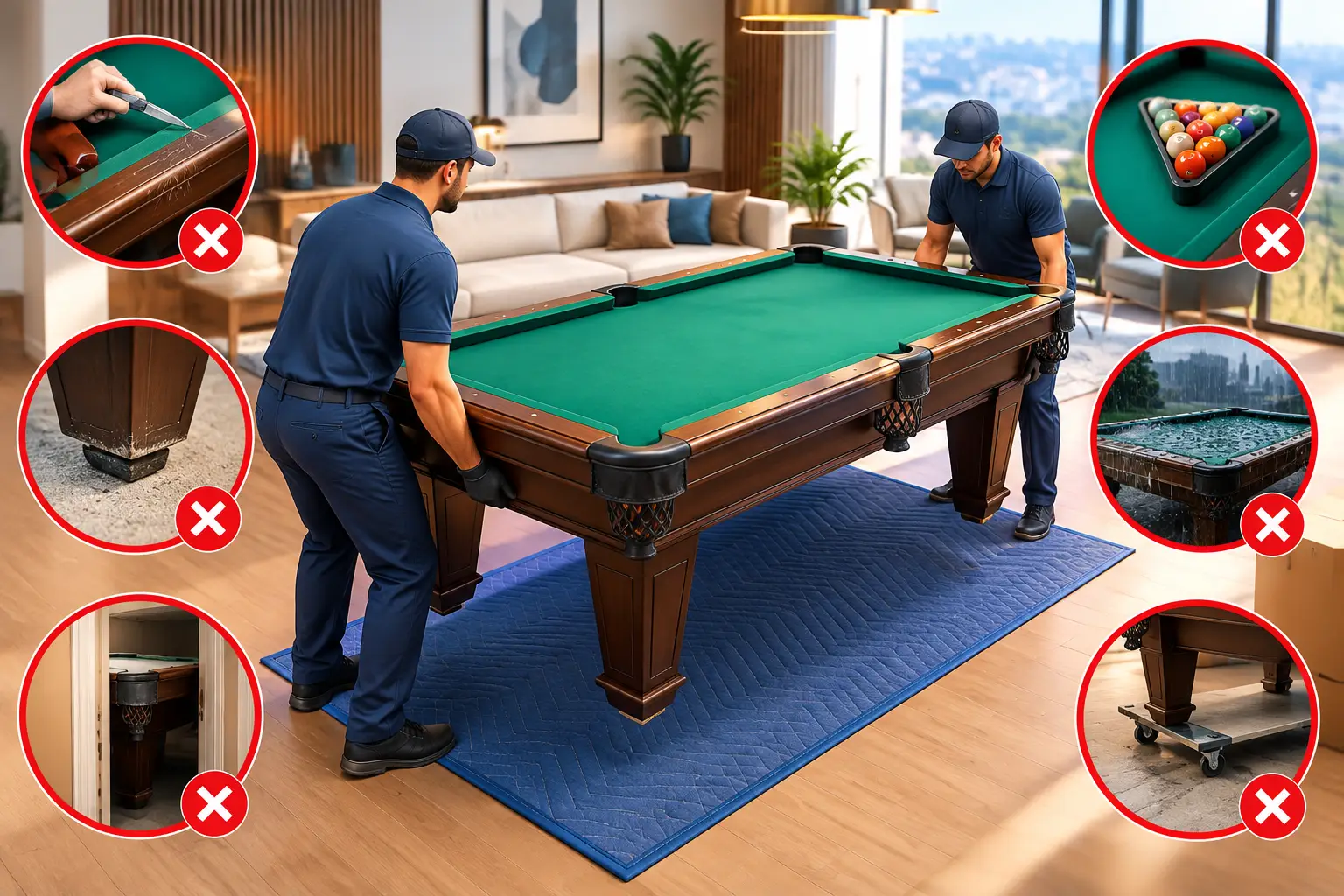
A pool table can look like one heavy piece of furniture, but the most expensive pool table relocation mistakes usually happen when it is treated that way. Under the cloth and rails is a system of slate, wood, hardware, seams, and carefully set geometry. A move that seems to go fine can still leave the table with dead cushions, a warped frame, loose rails, or balls that drift off line.
For a homeowner moving across town, renovating a game room, or bringing home a used table, the goal is not simply to get the table into its new room. The goal is to have it play properly once it is there.
1. Trying to Move the Table Fully Assembled
A typical slate pool table is not designed to be carried in one piece. The cabinet, legs, rails, cloth, slate, and hardware all carry weight differently. Attempting to lift the assembled table can overload the frame, rack the cabinet out of square, strain leg connections, and put people at risk.
Slate is especially unforgiving. Depending on the table, it may be a single piece or three separate pieces, and it can weigh hundreds of pounds. A table that survives a rough lift may still develop a subtle structural issue that shows up later as uneven play or a slate seam that will not stay true.
Proper relocation begins with a controlled teardown. Rails come off, the cloth is handled appropriately, the slate is removed and protected, and every component is prepared for transport. It takes more time than muscling the whole table through a doorway, but it protects both the table and the home around it.
2. Assuming Every Pool Table Comes Apart the Same Way
Not all tables are built alike. Some have three-piece slate, while others use one-piece slate. Leg designs vary. Older tables may have hardware that is worn, hidden, or no longer standard. Furniture-style tables can have decorative components that need special care, and some imported tables use construction methods that require a different approach.
This is one reason used pool table buyers should avoid agreeing to a move based only on table size. A seven-foot table and an eight-foot table can have very different weights and construction details. Photos of the underside, legs, rail bolts, and manufacturer label can help identify what is involved before move day.
The trade-off is simple: a quick assumption may save a few minutes at the start, but it can create costly repair work later. A professional assessment helps determine the safest sequence for disassembly, packing, transport, and reassembly.
3. Skipping a Path Check Before the Move
The route matters as much as the table. Tight turns, narrow stairways, low basement ceilings, wet ground, and uneven driveways can change the equipment and manpower needed. The same is true at the destination. A perfect new game room is not useful if the slate cannot make it safely through the entrance or down the stairs.
Measure doorways, hallways, stair landings, and ceiling clearance before scheduling the relocation. Also account for railings, light fixtures, wall art, and finished flooring. Slate corners can be damaged when they are rushed around a turn, while door casings and walls can take a hit from a poorly planned carry.
A path check is not about making a move feel complicated. It is about avoiding last-minute improvisation with a very heavy, fragile component in the middle of your home.
4. Transporting Slate Without Proper Protection
Slate is the playing surface foundation, not an indestructible slab. It can chip at the edges, crack from impact, or flex under improper support. Even a small chip near a seam can make accurate assembly more difficult.
Each slate section should be protected, secured, and carried in a way that prevents it from shifting in transit. The frame and rails deserve the same attention. Rails can be scratched, cushion facings can be disturbed, and small hardware can disappear if parts are tossed together without organization.
The mistake here is often assuming that blankets alone solve the problem. Padding is useful, but safe transport also depends on the order of loading, secure placement in the vehicle, and keeping heavy components from moving against one another. Good packing protects the finish as well as the table's playability.
5. Reusing Worn Cloth Without Looking at Its Condition
A relocation requires the cloth to be removed or worked around during slate service. That creates a useful decision point. If the cloth is still clean, tight, and free from damage, it may be reasonable to reinstall it. If it is faded, stained, thin around the break area, or already pulling loose near a pocket, putting it back on can be false economy.
New cloth gives the table a finished appearance after a move, but the benefit is not only cosmetic. Properly installed cloth supports a smooth, consistent roll. This is also a practical time to choose a color that fits a renovated room or to upgrade the playing surface for the way your family uses the table.
It depends on the table and the cloth. A lightly used premium cloth may be worth preserving. An older cloth that has been stretched several times is usually better replaced while the table is apart.
6. Treating Leveling as a One-Time Check
One of the most common pool table relocation mistakes is believing that a carpenter's level on the cabinet tells the whole story. It does not. A pool table must be leveled at the slate, with attention to all sections, seams, and the finished playing surface.
Floors are rarely perfectly flat, particularly in older Hudson Valley homes, finished basements, and rooms over garages. A table can appear level from one end yet send a slow-rolling ball toward a rail from another area. Slate seams also need to be aligned and filled correctly before cloth is installed.
Precision leveling is detailed work. The frame must be supported correctly, slate sections must sit properly, and fine adjustments need to be checked from multiple directions. A table that is merely "close enough" can frustrate casual players and serious players alike every time a shot rolls unexpectedly.
7. Ignoring Loose Rails and Cushion Problems
Reassembly is not just a matter of bolting parts back together. Rail alignment affects pocket openings, sight lines, and the way a ball responds off the cushion. If rail bolts are not tightened correctly or the rails are not seated evenly, the table may look assembled but play poorly.
A move is also the right time to inspect cushion rubber. Hardened or dried-out cushions can produce a dull, inconsistent rebound. Loose pocket irons, damaged facings, and worn rail cloth are easier to address while the table is already disassembled.
There is a budget consideration here. Not every table needs new cushions during every relocation. But if the rubber has lost its response, installing fresh cloth alone will not restore the table's performance. Addressing the actual issue is more valuable than covering it up.
8. Losing Hardware or Mixing Up Parts
A pool table includes more specialized hardware than many owners expect. Rail bolts, slate screws, shims, leg hardware, pocket components, and trim pieces may look similar while serving very different purposes. Mixing them together in an unlabeled bag can turn reassembly into guesswork.
This is particularly risky with older or restored tables, where replacement parts may be difficult to match. Hardware should be organized by component, protected during transport, and accounted for before assembly begins. If a bolt is forced into the wrong location, it can damage threads or split surrounding wood.
Careful organization is one of those behind-the-scenes details customers may never see, but it is part of reliable game-room service. The table should go back together with the correct parts in the correct places, not with improvised substitutions.
9. Choosing Help Based Only on the Lowest Price
Moving a pool table is a specialized service, and the lowest quote does not always include the work needed for a dependable result. Ask what is covered: disassembly, protected transport, slate setup, precision leveling, rail installation, cloth handling, and any repair work identified during the move.
Insurance matters too. A slate table is a substantial investment, and the service provider should be prepared to take responsibility for the work. Clear communication before the appointment helps avoid surprises about stairs, difficult access, refelting, or damaged components found during teardown.
TableSmith Installations approaches relocation as more than transportation. The table is disassembled, moved, rebuilt, and tuned with the finished playing experience in mind. That is the difference between having a pool table in the room and having one that is ready for a proper game.
Plan for the Table You Want to Play On
Before your next move, take a few photos of the table, measure the access route, and consider whether the cloth, cushions, or finish need attention while everything is apart. Then choose a qualified, insured specialist who understands slate, rails, and precision leveling. A careful relocation protects the table you own and gives you a better reason to gather around it after the boxes are gone.