
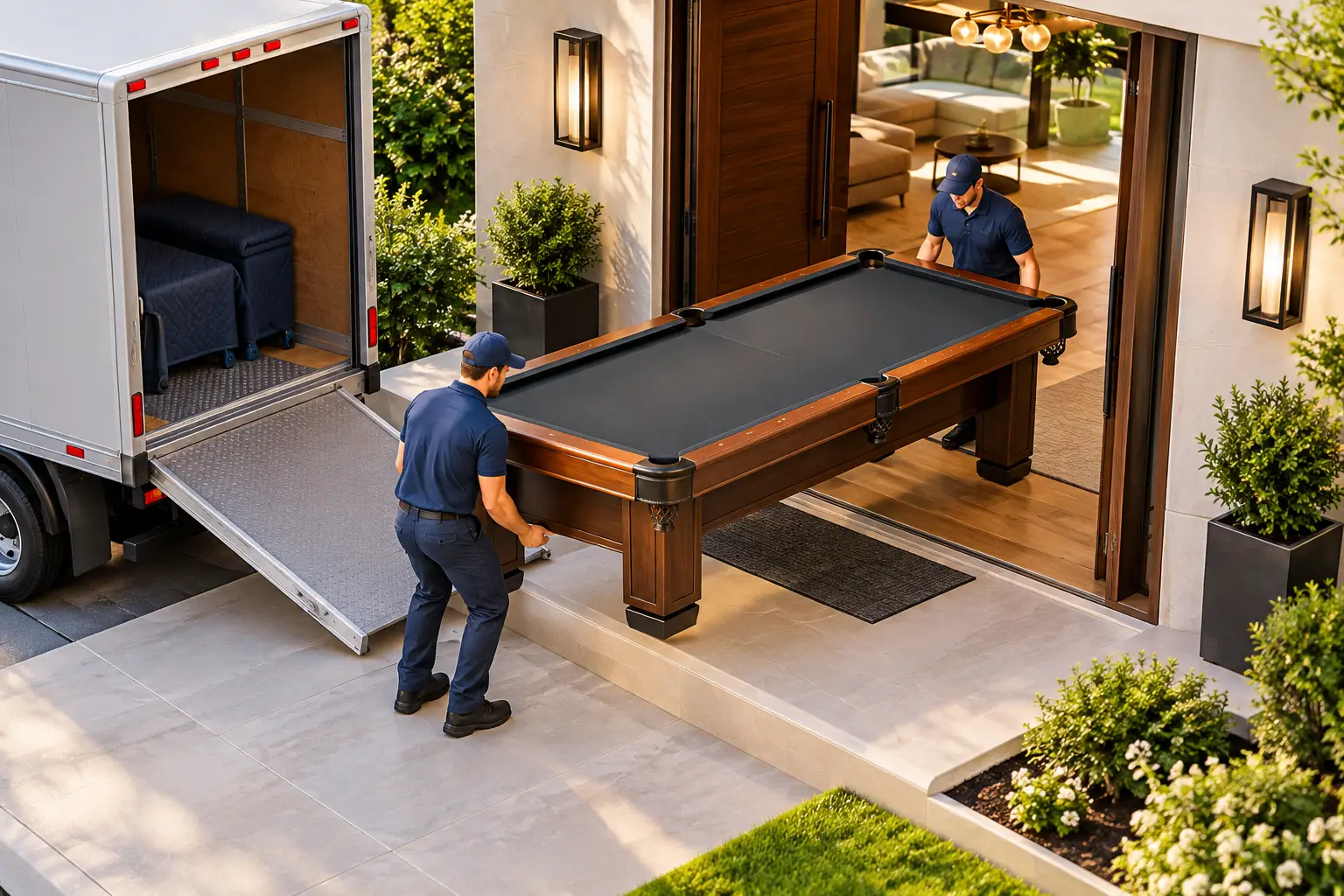
A pool table does not arrive like a couch or a boxed appliance. A quality table may have three pieces of slate, a heavy cabinet, rails, legs, and hardware that all need to reach the final room without being dropped, twisted, or exposed to unnecessary risk. This pool table delivery access guide helps homeowners prepare the route before moving day, so the table can be handled safely and set up to play the way it should.
For most homeowners, the biggest surprise is not the table’s weight. It is the path. A delivery can be straightforward through a wide ground-floor entry, or it can require careful planning around a narrow stairwell, a sharp landing, low ceiling clearance, or a finished basement. Measuring early gives you time to solve access issues before the table is sitting in the driveway.
Start With the Full Route, Not Just the Game Room
The room where the table will sit matters, but it is only the last part of the job. Walk the complete route from the truck parking area to the final location. Include the driveway, walkway, porch, entry door, interior halls, staircases, turns, and every doorway in between.
Measure the narrowest point along that route. Door openings are often the obvious concern, but tight corners and stair landings can be more limiting than the door itself. Note whether doors can be removed from their hinges, whether handrails can be temporarily removed, and whether a hallway has furniture, wall art, or light fixtures that need protection.
A professional move begins with disassembly. Slate tables are not safely carried as one assembled piece. The rails, cloth, slate, frame components, and legs are handled in stages, then reassembled and precision leveled in the new space. Even so, access still matters because slate sections and larger cabinet parts require enough room to be carried upright, turned carefully, and supported properly.
Pool Table Delivery Access Guide: What to Measure
A tape measure and a few notes on your phone are usually enough for an initial assessment. Do not estimate by eye. An opening that looks generous can lose several inches once trim, a door swing, or a handrail is factored in.
Measure and photograph these areas before scheduling delivery or relocation:
- The width and height of exterior and interior door openings, measured inside the trim.
- Hallway widths, especially at turns, and the clearance beneath low lights or ceilings.
- Stair width, number of steps, landing dimensions, ceiling height, and railing position.
- The path from the street or driveway, including slopes, loose stone, gates, and porch steps.
- The destination room’s entry, floor condition, and clear working area around the planned table location.
Photos are useful because they show details measurements can miss. A tight corner may be manageable, while a decorative newel post or a ceiling soffit may change the plan. Clear photos of stairs from the top and bottom are especially helpful.
Stairs Are Possible, but They Change the Job
Many pool tables are installed in finished basements, second-floor game rooms, and converted attic spaces. Stairs do not automatically rule out delivery, but they deserve a closer look. The concern is not simply lifting strength. It is maintaining control of heavy components while protecting the slate, walls, flooring, railings, and the people carrying the load.
A straight, adequately wide staircase with a usable landing is generally easier to assess than a winding stair or a tight switchback. Low ceilings can be just as limiting as narrow steps because slate must be maneuvered without forcing it against drywall or trim. Basement stairs with a low bulkhead near the bottom often need special attention.
Exterior access can sometimes be a better option than an interior staircase, but only if the route is stable, dry, and clear. Wet leaves, ice, mud, steep grades, or uneven pavers turn an otherwise workable path into a risk. If weather may affect access, plan for it rather than hoping conditions improve at the last minute.
Make the Delivery Path Ready
Preparing the route is one of the most practical ways a homeowner can help protect the table and the home. Move small furniture, rugs that can slide, floor lamps, toys, pet bowls, and breakable items out of the path. Clear enough space for carriers to make controlled turns rather than squeeze past obstacles.
If the table is going into a basement or upstairs room, secure pets in a separate area and keep children away from the work zone. Open gates and unlock doors before the crew arrives. If parking is limited, reserve the closest practical space and let neighbors or building management know when appropriate.
Floor protection depends on the route. Hardwood, tile, and finished stair treads may need added care, while soft ground outside may require a different approach. Avoid laying down loose plastic sheeting or thin materials that create a slip hazard. The goal is traction and controlled movement, not a rushed path.
Prepare the Room for More Than Delivery
Once the table is inside, it still needs room for assembly, slate installation, leveling, rail fitting, and cloth work. Do not fill the room with boxes or new furniture before the table is set. The installer needs access around all sides of the cabinet to build it correctly and make precise adjustments.
Leave the planned table area open, including the perimeter where players will stand and shoot. A table may technically fit within a room but still feel cramped if cue clearance is ignored. Standard cues are commonly about 58 inches long, so room planning should account for both the table footprint and the stroke space around it. Shorter cues can help in a limited area, but they are a compromise, not a substitute for thoughtful layout.
The floor also deserves an honest look. A professional setup can compensate for many normal floor variations through careful leveling, but a soft, damaged, or severely sloped surface should be discussed in advance. The table needs stable support. If flooring is being replaced or a renovation is unfinished, it is usually better to complete that work before final installation.
Understand Why Slate Needs Careful Handling
Slate is valued because it creates a stable, true playing surface. It is also heavy, brittle at edges, and unforgiving of impact. Chips can often be repaired, but preventing damage is always preferable to correcting it later.
Three-piece slate tables are designed to be disassembled for transport. During reassembly, the seams are filled and the sections are leveled as a unified surface. This is not a quick furniture assembly task. Small errors in the frame, slate seams, or leg support can affect ball roll, rail alignment, and the overall feel of the table.
One-piece slate tables can present additional access challenges because the slab remains whole. Depending on the model and the route, the practical solution may differ. This is exactly why accurate dimensions and photos are more valuable than assumptions.
Plan Around Renovations, Used-Table Purchases, and New Cloth
Delivery access should be considered early when buying a used pool table. A low purchase price can become less attractive if the table cannot safely reach the intended room or if it needs structural repair, new cushions, or replacement cloth after the move. Ask about the table’s size, slate configuration, and condition before committing.
For homeowners renovating a game room, schedule the installation after major dusty work, painting, and flooring projects are complete. Fresh cloth can collect construction dust quickly, and a newly leveled table may need to be moved again if flooring changes afterward. If you are replacing cloth, cushions, or worn components, handling that work during reassembly is often the sensible time to do it.
TableSmith Installations approaches relocation as more than transportation. The goal is to protect the equipment during the move, then return it to a level, solid, playable condition in its new room. That includes attention to the slate, frame, rails, cushions, and the final playing surface.
When Access Is Tight, Be Direct About It
Do not wait until delivery day to mention the narrow basement door, steep driveway, or two flights of stairs. Tight access does not always prevent a successful installation, but it may affect crew planning, timing, equipment, or the best route into the home. Honest details lead to a safer plan.
If you are unsure whether a route will work, send clear measurements and photos before the appointment. Include any recent changes such as new fencing, renovation debris, snow, landscaping, or furniture that may affect access. A few minutes of preparation can prevent damage, delays, and difficult decisions at the door.
Your pool table should arrive as the beginning of a game room you can enjoy, not as a problem you have to work around. Clear the route, measure carefully, and leave room for skilled assembly. The extra preparation protects both your home and the quality of every game played afterward.