
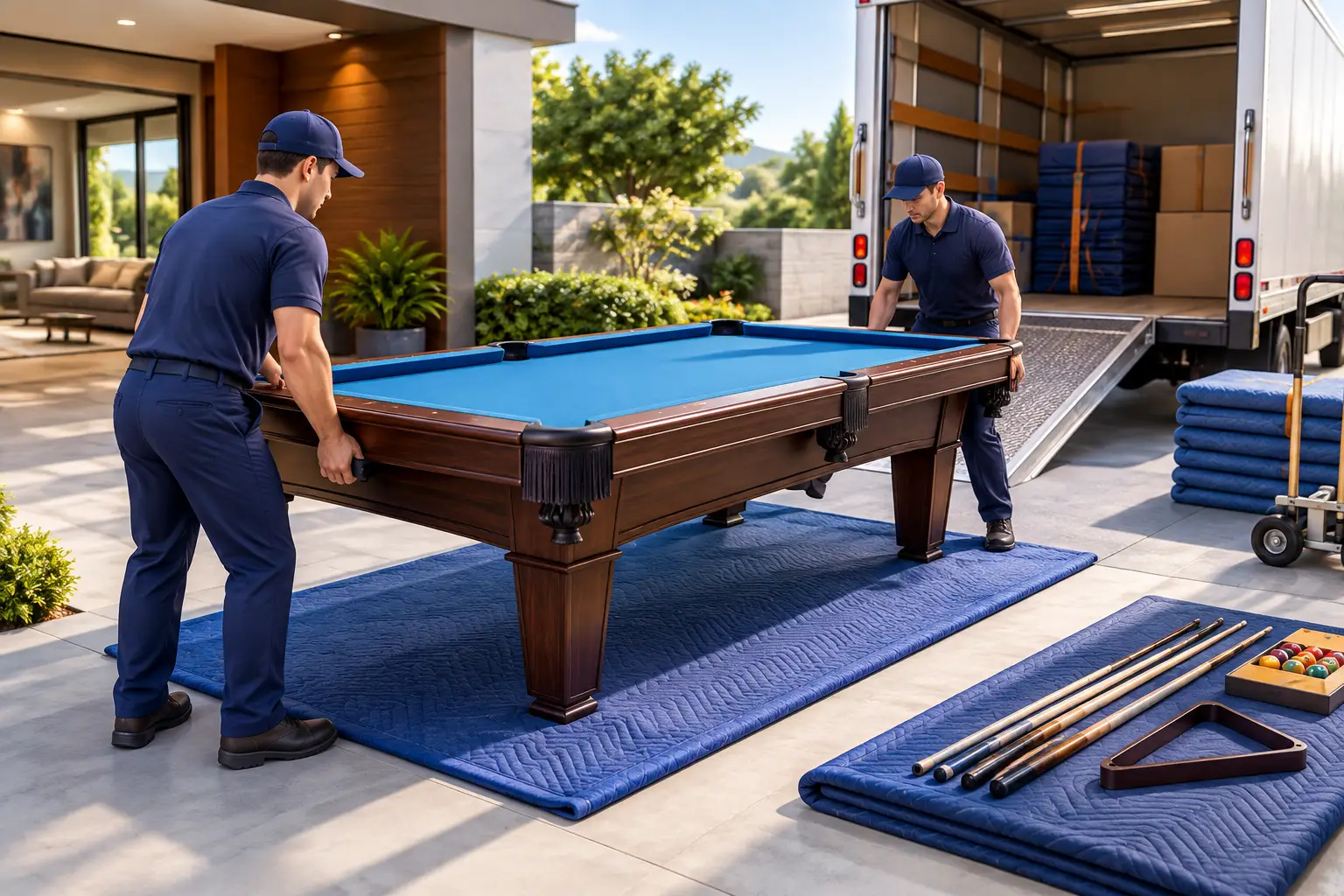
A pool table can look like one solid piece of furniture until it is time to move it. Then the realities show up: heavy slate, long rails, delicate cushions, hidden hardware, narrow stairs, and a playing surface that must go back together precisely. This billiard transport guide explains what a safe move actually involves and where professional handling protects both your table and the way it plays.
Why Pool Table Transport Is Different
Most quality home pool tables are built around one-piece or three-piece slate. Slate provides the flat, stable base a table needs, but it is also heavy, brittle, and unforgiving when handled carelessly. A crack, chipped edge, or warped support can turn a straightforward relocation into a costly repair.
The slate is only part of the concern. Rails must stay straight, bolts and shims need to be organized, and the frame has to arrive without being twisted or damaged. If the cloth is being reused, it also needs to be removed and handled properly. Even a table that appears fine after a rushed move may develop loose rails, uneven seams, slow spots, or balls that drift off line.
That is why a pool table should not be treated like a dresser with a few removable legs. Proper billiard transport is a disassembly, protection, relocation, and precision reinstallation job.
Start With the Table and the Route
Before anyone lifts a rail or removes a bolt, identify what is being moved. The table size, slate configuration, construction, age, and condition all affect the plan. A modern three-piece slate table generally comes apart in manageable sections. A one-piece slate table may require a very different approach, especially when stairs, tight turns, or low ceilings are involved.
The route matters just as much as the table itself. Measure doorways, hallways, stair landings, and turns from the current game room to the vehicle, then from the destination entrance to the final room. Do not assume a table that fit into a house years ago can follow the same path out easily. Remodeling, new flooring, railings, furniture, and landscaping can all change the move.
It also helps to consider the destination room before transport day. The floor should be stable, the room should have enough clearance for comfortable cue use, and there should be a reasonable path for carrying slate inside. If new flooring, painting, or electrical work is planned, it is usually smarter to complete that work before the table is installed and leveled.
The Proper Billiard Transport Guide: Disassembly First
A safe move begins with complete, methodical disassembly. Trying to carry a slate pool table in one piece can strain the frame, damage the cabinet, or create a serious lifting hazard. Removing the rails, cloth, slate, legs, and frame components makes the job safer and makes reassembly more accurate.
The rails are removed first, with care taken to protect the finish, pockets, and cushion facings. Rail hardware should be kept together and labeled rather than tossed into a general box. It is a small detail that prevents delays and missing parts later.
Next comes the cloth. Whether it can be reused depends on its condition and how it was installed. Stapled cloth can sometimes be removed carefully, although age, wear, and stretching may make replacement the better choice. Glued cloth is more likely to be damaged during removal. A move is often a practical time to select fresh cloth, particularly if the existing bed cloth has worn spots, tears, fading, or permanent ball marks.
Once exposed, the slate sections can be removed. On three-piece tables, each slate piece should be supported, carried vertically when appropriate, and protected from hard contact. The seams and edges are especially vulnerable. The frame and legs are then broken down as needed, wrapped, and prepared for transport.
Protecting Slate, Rails, and Hardware in Transit
Loading the truck is not simply about fitting everything inside. Slate needs firm support and protection from shifting. Rails need padding that prevents dents and scuffs without placing pressure on the cushions. Decorative legs and cabinet pieces need to be secured so they do not rub against heavy components or slide during turns and stops.
A professional relocation also keeps hardware accounted for. Slate screws, rail bolts, pocket irons, shims, apron hardware, and leg assemblies all have a place in the final build. Missing or substituted hardware can affect stability and make future service more difficult.
Weather deserves attention as well. Rain and moisture can affect wood components, cloth, and cardboard packing materials. Extreme temperature changes are less of a concern for slate itself than for adhesives, finishes, and cloth, but careful wrapping and a direct route into the home reduce unnecessary exposure.
If a move includes storage, the conditions matter. A dry, climate-controlled space is far safer than a damp garage, shed, or basement. Wood frames can absorb moisture, metal hardware can corrode, and cloth can develop stains or odors when packed poorly.
Reassembly Is Where the Table Earns Its Playability
Getting the table into its new room is only the midpoint of the job. A pool table must be rebuilt in the correct sequence and leveled as a complete system. Placing a carpenter's level on the slate and adjusting one leg may appear to solve the problem, but it does not account for the frame, slate seams, or the actual roll of the balls.
The frame is assembled first and checked for stability. It should sit firmly without rocking or flexing. Then the slate is installed, aligned, and leveled across the bed and at every seam. Depending on the table and floor, this may require careful shimming and repeated adjustments. A quality installation checks both side-to-side level and end-to-end level, then confirms that the surface rolls true.
Slate seams are filled and finished so they do not telegraph through the cloth or interfere with play. Fresh cloth is stretched evenly over the bed, with enough tension for consistent speed but not so much that it is stressed or distorted. Finally, the rails are installed, tightened, and aligned. Proper rail work supports clean rebound, secure pockets, and the solid feel players expect.
This is also the right time to address problems that were hidden before disassembly. Worn cushion rubber, loose pocket irons, cracked rail laminate, damaged featherstrips, or weak frame supports are easier to inspect when the table is apart. Repairing them during reassembly prevents a second teardown later.
When DIY Transport Can Cost More
Some owners consider moving a pool table themselves to save money. For a lightweight, non-slate recreational table on a simple ground-floor move, that may be workable with the right equipment and experienced help. But most slate tables do not fall into that category.
The risks are not limited to dropping slate. A table can be reassembled with seams slightly out of position, a frame can be tightened while under stress, or rails can be installed unevenly. The result may be a table that looks acceptable but never plays correctly. Correcting those mistakes often requires another full disassembly.
There is also the personal safety factor. Slate sections can weigh hundreds of pounds, and awkward stairways magnify the risk. A professional pool table relocation service brings the right moving methods, protective materials, and knowledge of how each component should be handled.
Plan the Move Around the Condition You Want Afterward
A relocation creates a useful decision point. If you have been considering new cloth, upgraded cushion rubber, pocket replacement, or restoration work, completing it while the table is apart is usually more efficient than scheduling separate service later. It also gives the finished table a consistent look and a fresh playing surface in its new room.
For homeowners across the Northeast, TableSmith Installations handles the process as one accountable service: careful teardown, protected transport, precision assembly, and leveling focused on actual play. The goal is not merely to put a pool table back in a room. It is to leave you with a stable, attractive table that rolls true when the first rack is broken.
Before setting a moving date, take a few measurements, clear the path, and think through the condition you want your table to be in when it reaches its new home. A careful plan now is what protects the investment and keeps game night from starting with a crooked shot.