
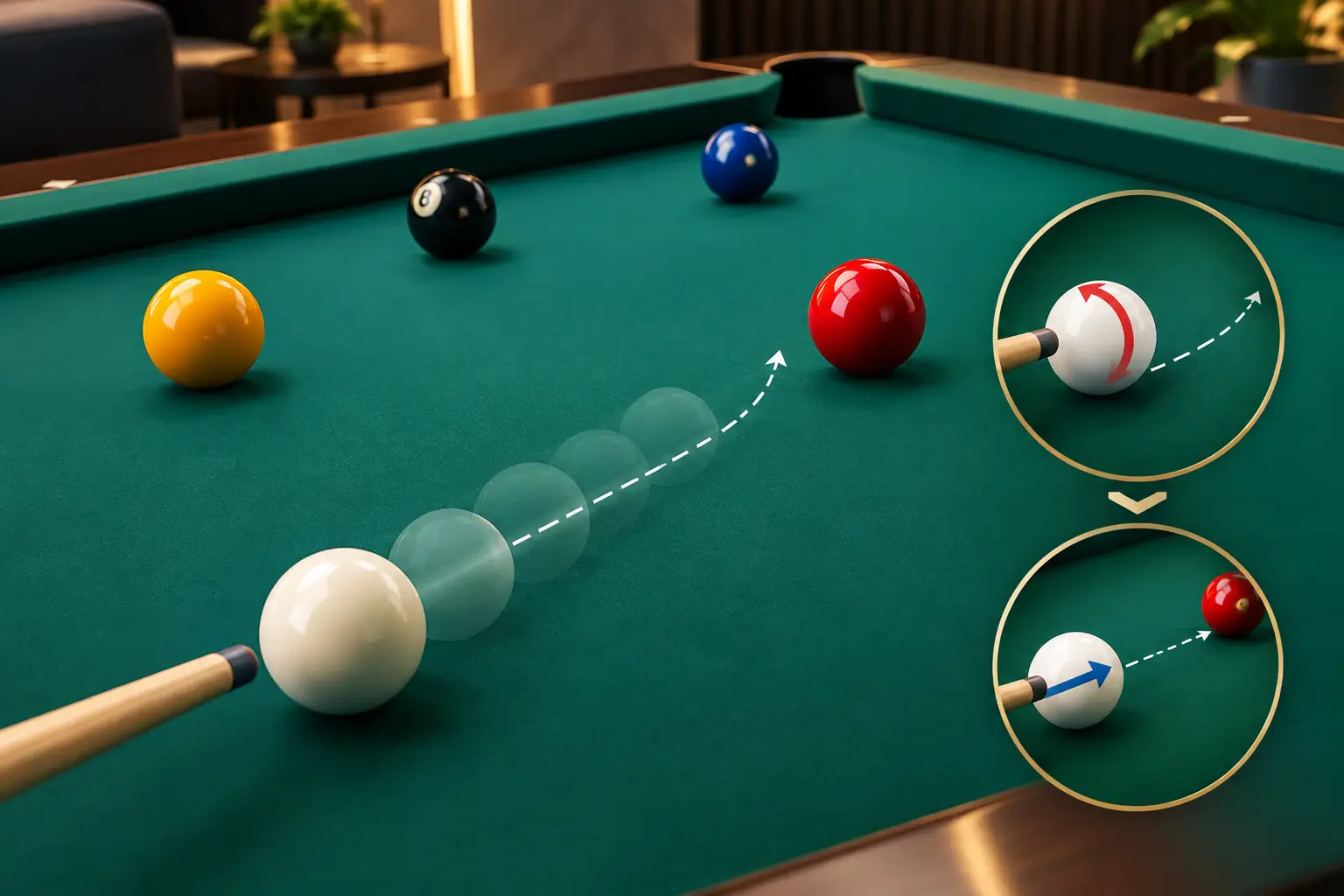
A ball that rolls straight for two feet and then quietly pulls toward one rail can make even a casual game frustrating. If you are asking why billiard balls drift, the answer is usually not the ball itself. Drift is most often a sign that the playing surface, the table structure, or the room beneath the table needs attention.
On a properly installed table, a clean cue ball should travel in a straight, predictable path when struck without side spin. No table is perfectly immune to environmental changes or normal wear, but noticeable and repeatable drift is not something to ignore. It affects shot making, can disguise a player’s actual stroke, and may point to a larger issue that gets harder to correct over time.
Why Billiard Balls Drift on an Otherwise Good Table
Gravity is the most common cause. A pool table does not have to look dramatically crooked for balls to favor one direction. A very small change in level across the slate can alter a slow-rolling ball’s path. The slower the ball moves, the more obvious that pull becomes.
This is why a quick check with a basic level on the rail is not a reliable diagnosis. Rails are not the playing surface, and the playing surface may have its own variations from slate seams, cloth tension, frame movement, or an uneven floor. Professional pool table leveling is performed on the slate itself, with the table assembled correctly and the slate supported as intended.
Drift can also appear after a table has been moved, after a seasonal change in a home, or when a table has been sitting on a floor that gradually settled. A slate table is heavy, but weight does not make it self-leveling. In fact, its weight makes proper support and adjustment more critical.
A table can be level and still have a problem
There is an important distinction between a table that is out of level and a surface with a localized roll-off. If every slow ball moves toward the same end or side of the table, overall leveling is a likely suspect. If a ball changes direction only when it crosses one particular area, the issue may be closer to a slate seam, a low spot, a raised edge, or cloth that is affecting the roll.
That difference matters because adding a shim under a leg may improve one symptom while creating another. Good repair work starts by identifying where the ball changes path and why.
The Most Common Causes of Billiard Ball Drift
The floor has settled or shifted
Many residential floors have minor movement. Wood framing can respond to changes in moisture and temperature. Older homes may have floors that are not perfectly flat, while recently renovated rooms can reveal settlement once heavy furniture is placed back in position.
A table that played true when it was installed can develop drift months or years later. This does not automatically mean anything is wrong with the slate. It may simply need careful re-leveling to account for the room’s current conditions.
The slate was not leveled as a system
Most quality pool tables use one-piece or three-piece slate. With three-piece slate, each section must be supported, positioned, joined, and leveled in relation to the others. The seams must be made smooth before cloth is installed. If one slate section sits slightly higher or lower than the next, a ball can react at the seam even when the table seems level from end to end.
The frame matters here as much as the slate. Loose hardware, an incorrectly assembled cabinet, or poor support beneath the slate can cause movement that no amount of casual leg adjustment will fully solve.
The cloth is loose, damaged, or improperly installed
Cloth should lie smooth and evenly tensioned across the playing surface. Wrinkles, loose areas, torn backing, or excessive wear can influence a very slow roll. The effect is usually subtler than an out-of-level slate, but it can be noticeable around a seam or in a high-traffic area of the table.
Humidity can contribute as well. Cloth absorbs moisture from the air, and a damp or dirty cloth plays slower. It will not usually cause consistent directional drift on its own, but it can make an existing leveling issue easier to notice. If the cloth is worn or stained, refelting may improve both the table’s appearance and its consistency, provided the slate is prepared and leveled correctly first.
Dirt, chalk, and residue are changing the roll
A layer of chalk dust, pet hair, spilled residue, or cleaning product buildup can interfere with the ball’s contact with the cloth. This is especially true when the material collects in one area. A cue ball may appear to wander, skid, or react unpredictably rather than follow a smooth curve toward the low side.
Start with clean, polished balls and a properly brushed cloth. Avoid household cleaners, which can leave residue or damage the fabric. If the problem remains after basic cleaning, the cause is more likely mechanical than cosmetic.
The balls are worn or mismatched
Old balls can become scratched, chipped, out of round, or coated with residue. A damaged cue ball may not roll consistently, particularly on slower shots. Using balls from different sets can also create slight differences in weight and diameter.
This is one of the easier causes to rule out. Test with a clean, quality cue ball and a matched set of balls. If several balls drift in the same place and direction, the table deserves closer inspection.
How to Tell Where the Problem Is Coming From
A simple rolling test can provide useful information without taking the table apart. Clean the cue ball, then place it near the center of the table. Gently roll it toward each end and each side with as little side spin as possible. Repeat the same paths a few times rather than trusting one roll.
Watch for patterns. A consistent pull toward the same side points toward overall level. A sudden change in direction over a small part of the table suggests a seam, surface variation, or cloth issue. If the ball behaves differently depending on speed, that can indicate a subtle slope that only becomes apparent as the ball slows.
Do not use a hard break or a forceful stroke as your test. Speed can carry a ball over a minor low spot and hide the issue. Slow, straight rolls reveal more.
It also helps to check whether the table rocks when gentle pressure is applied to opposite rails. A table should feel solid. A rocking cabinet, shifting leg, or loose frame connection can affect how the slate is supported and should be corrected before any final leveling work is done.
Why Quick Fixes Often Make Drift Worse
Putting a coaster, cardboard, or random shim under one leg may seem like an easy solution. Sometimes it temporarily changes the direction of drift. It can also twist the cabinet, alter support under the slate, or create a new roll-off elsewhere on the table.
The same is true of trying to stretch cloth while it remains installed or tightening rail bolts in hopes of correcting the roll. Rails influence cushion response and pocket geometry, but they do not level the slate. Each part of a pool table has a specific job, and adjustments need to be made in the proper order.
A careful service approach starts with the base and frame, checks the slate support and seams, then establishes accurate level across the full playing surface. Only after that should cloth, rails, and final play testing be addressed. The result is not just a table that looks straight. It is a table that gives you honest feedback on every shot.
When Professional Leveling Is Worth It
Professional service is especially worthwhile after a move, after buying a used table, when replacing cloth, or when drift continues despite basic cleaning and testing. Slate is heavy and brittle at the wrong point of pressure. Moving or adjusting it without the right process can chip edges, damage seams, strain the frame, or leave the table playing worse than before.
TableSmith Installations treats leveling as part of the table’s performance, not a final cosmetic step. Proper assembly, secure slate support, seam preparation, cloth installation, and rail alignment all work together to create true roll.
If your table has only a slight pull and the room is stable, a precision re-level may be all it needs. If drift occurs at a seam, if the table rocks, or if the cloth and cushions are worn, it may make sense to address those items during the same appointment. The right repair depends on what the table is telling you, not on a one-size-fits-all fix.
A drifting ball is a useful warning, not just an annoyance. Give the table a few careful rolling tests, keep the surface and balls clean, and have persistent drift evaluated before small changes in support turn into a game that never feels quite right.