
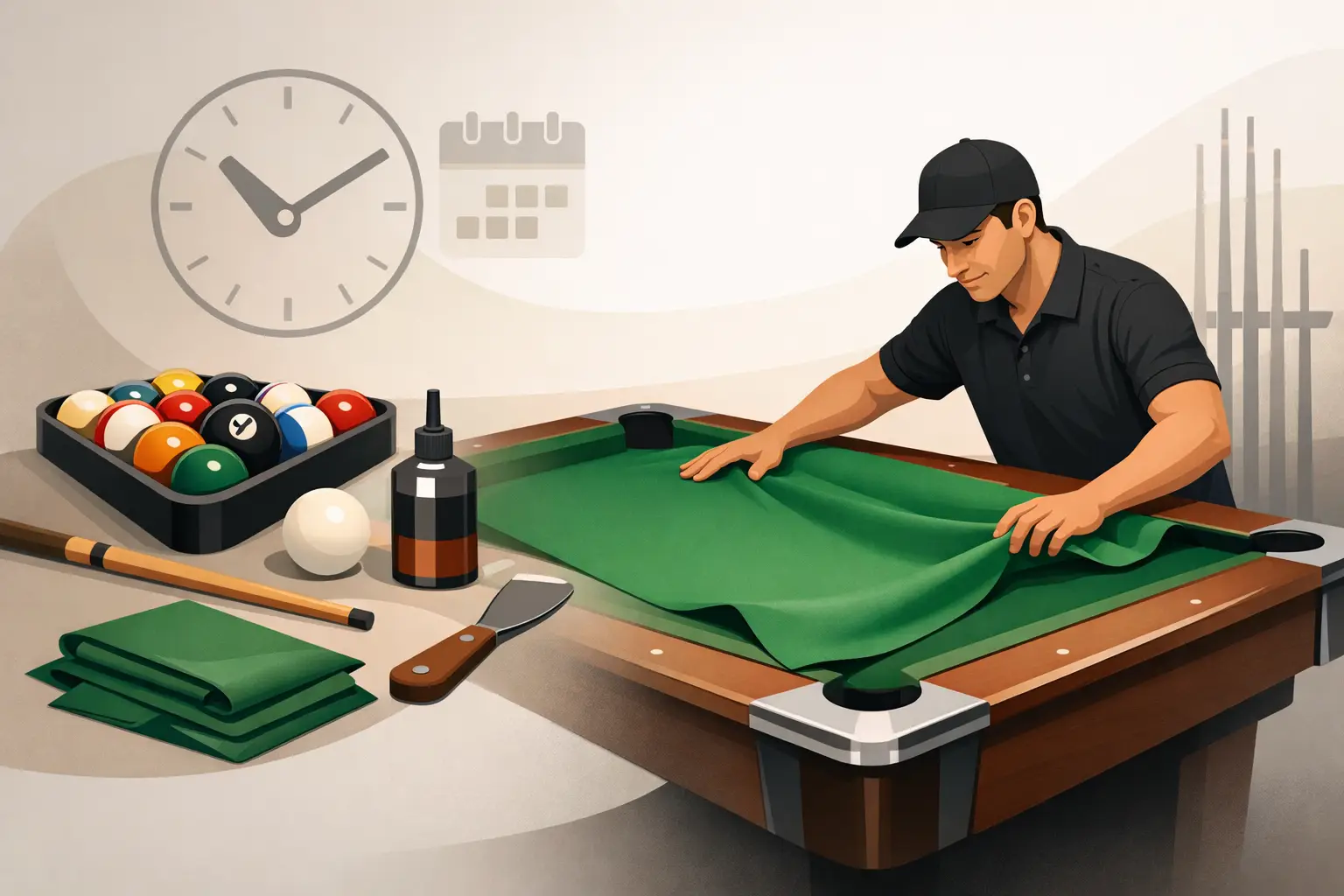
A pool table refelting service is more than a cosmetic update. Fresh cloth changes how the balls roll, how the table responds to spin, and how your game room feels when friends or family gather to play. When the old cloth is worn, stretched, stained, or torn, a professional refelt can restore both the appearance and performance of a table without overlooking the rails, slate, pockets, or level.
For Hudson Valley table owners, the goal should not simply be to put new material on the bed. The goal is a table that plays true when the work is finished. That requires careful cloth selection, proper rail work, precise stretching, and a close look at the table’s overall condition before the new felt goes on.
Signs Your Pool Table Needs New Cloth
Some tables clearly need refelting. A tear near a pocket, a burn mark from a bad jump shot, or a worn spot in the rack area leaves little room for debate. Other signs are less obvious but can still affect play.
If the balls seem to drift, slow down unpredictably, or roll differently in certain parts of the table, worn cloth may be part of the problem. Cloth fibers flatten and collect chalk, dust, oils, and residue over time. A cloth that has been stretched loose can also develop ripples or soft areas that interfere with a clean roll.
Look closely at the head spot, the foot spot, and the areas around the side pockets. These high-use areas usually show wear first. Fading, thin patches, stubborn stains, frayed edges, and cloth pulling away from the rails are all reasons to schedule service.
The age of the cloth matters, but how the table has been used matters more. A lightly played home table can go many years before it needs new cloth. A frequently used recreational table, especially one used by kids, guests, or serious players, may need attention much sooner. Pets, food and drinks, direct sunlight, and smoking can also shorten the useful life of the material.
What a Professional Pool Table Refelting Service Includes
Quality refelting starts before the old cloth is removed. The table should be inspected for loose rail bolts, worn pockets, damaged featherstrips, cushion problems, frame movement, and slate seams that may need attention. There is no benefit to installing beautiful new cloth over a table that is loose, uneven, or structurally compromised.
The rails are removed carefully so the existing material can be taken off without damaging components that may still be in good condition. The slate bed is cleaned and inspected. If a table has been moved, has settled over time, or shows signs of uneven play, this is also the right time to check the slate leveling.
New cloth is installed with controlled tension. Too little tension can leave wrinkles or allow the cloth to shift. Too much can distort the material, place unnecessary stress on attachment points, and create inconsistent play. The rail cloth must be fitted cleanly around each pocket opening, with edges secured so the finished table looks sharp and holds up to regular use.
At TableSmith Installations, I treat refelting as part of the table’s complete playing system. The bed, rails, cushions, pockets, and slate all work together. A table can look refreshed from across the room and still disappoint a player if the rails are loose or the surface is not level.
Choosing the Right Pool Table Cloth
The right cloth depends on how you use the table. Color matters for the look of your game room, but the weave and grade have a direct effect on speed, durability, and maintenance.
Standard woolen billiard cloth is a practical choice for many residential tables. It has a softer feel, is generally more forgiving for casual play, and holds up well in active family game rooms. Its slightly heavier nap creates a slower playing surface than tournament-style material, which can be a benefit for players who want a familiar, relaxed home-table feel.
Worsted cloth has a tighter, smoother weave and a faster roll. It is popular with serious recreational players because it produces cleaner ball travel, less fuzz, and more consistent response. It usually costs more, and the faster surface can expose level or stroke issues that were less noticeable on older, slower cloth. For a player who cares about speed control and precision, that trade-off is often worthwhile.
Traditional green remains a dependable choice, but charcoal, burgundy, navy, tournament blue, and other colors can better suit a renovated game room. Very light colors show chalk and spills sooner. Very dark colors can hide debris until it affects play. The best choice balances the room’s design with the amount of use the table receives.
Refelting Is the Right Time to Handle Repairs
A refelt is one of the best opportunities to address issues that cannot be properly reached with the table fully assembled. If the cushions have hardened, the rails have lost their rebound, or the pocket liners are cracked, completing those repairs during refelting avoids taking the table apart again later.
Cushions deserve special attention. Good rubber cushions send the ball back with a predictable, lively response. Old cushions can become hard, dry, or uneven, causing dead spots and awkward angles. New cloth will improve the surface, but it cannot fix rails that no longer perform correctly.
Slate seams can also need service, particularly after a move. A three-piece slate table is designed to be disassembled, but it must be reassembled and leveled with care. If seam material has cracked or shifted, balls may react inconsistently as they cross a seam. Proper leveling checks the table in multiple directions and accounts for the frame and floor beneath it, not just one quick measurement across the center.
For used pool table buyers, this combination of service can be especially valuable. A table may look good in a seller’s basement yet need new cloth, rail work, and leveling once it reaches its new home. Addressing those needs before regular play begins protects the investment and prevents the frustration of a table that never quite feels right.
Why DIY Refelting Often Creates More Work
There are pool table refelting kits available, and a determined owner can install cloth on some basic tables. The challenge is that professional results depend on more than following a few steps. Pool tables use different rail designs, attachment methods, pocket styles, cloth cuts, and slate configurations. A single mistake around a pocket opening or rail edge can make the finished job look uneven.
The biggest issue is usually tension. Cloth must be pulled evenly across the slate and secured without wrinkles, bunching, or excessive stretch. If it is cut too short, damaged during installation, or attached out of alignment, replacement material may be required. Rail cloth is even less forgiving because pocket cuts need to be clean, consistent, and secure.
DIY work may make sense for a low-value utility table where appearance and exact play are not major concerns. For a slate table, an antique piece, a family heirloom, or a table you expect to enjoy for years, professional installation is usually the safer choice. The cost of correcting damaged rails, torn cloth, or poorly set slate can exceed the savings from doing it yourself.
How to Keep New Cloth Playing Well
Fresh cloth will last longer when it is cared for consistently. Use a soft table brush in one direction after play to remove chalk and dust. Keep food, drinks, and sharp objects away from the table, and use a fitted cover when the room is not in use for extended periods.
Avoid aggressive household cleaners. Most stains should be addressed gently and promptly, because rubbing can spread residue or damage the fibers. If a spill or damage occurs, it is better to ask about the correct approach before applying a cleaner that may leave a permanent mark.
Humidity and sunlight also matter. A damp basement can affect wood components and cloth condition, while direct sun can fade colors over time. A stable indoor environment helps protect the table, the rails, and the new playing surface.
Book Service Before Wear Affects the Game
Waiting until cloth is completely torn is not always the best plan. Early scheduling gives you time to choose the material and color you want, coordinate any repairs, and have the work completed before a holiday gathering, game-room renovation, or planned move.
A well-refelted table should invite you to play it. If yours has lost its clean look, consistent roll, or confident rail response, professional care can bring the game room back to life and give every rack a fair chance to play the way it should.