
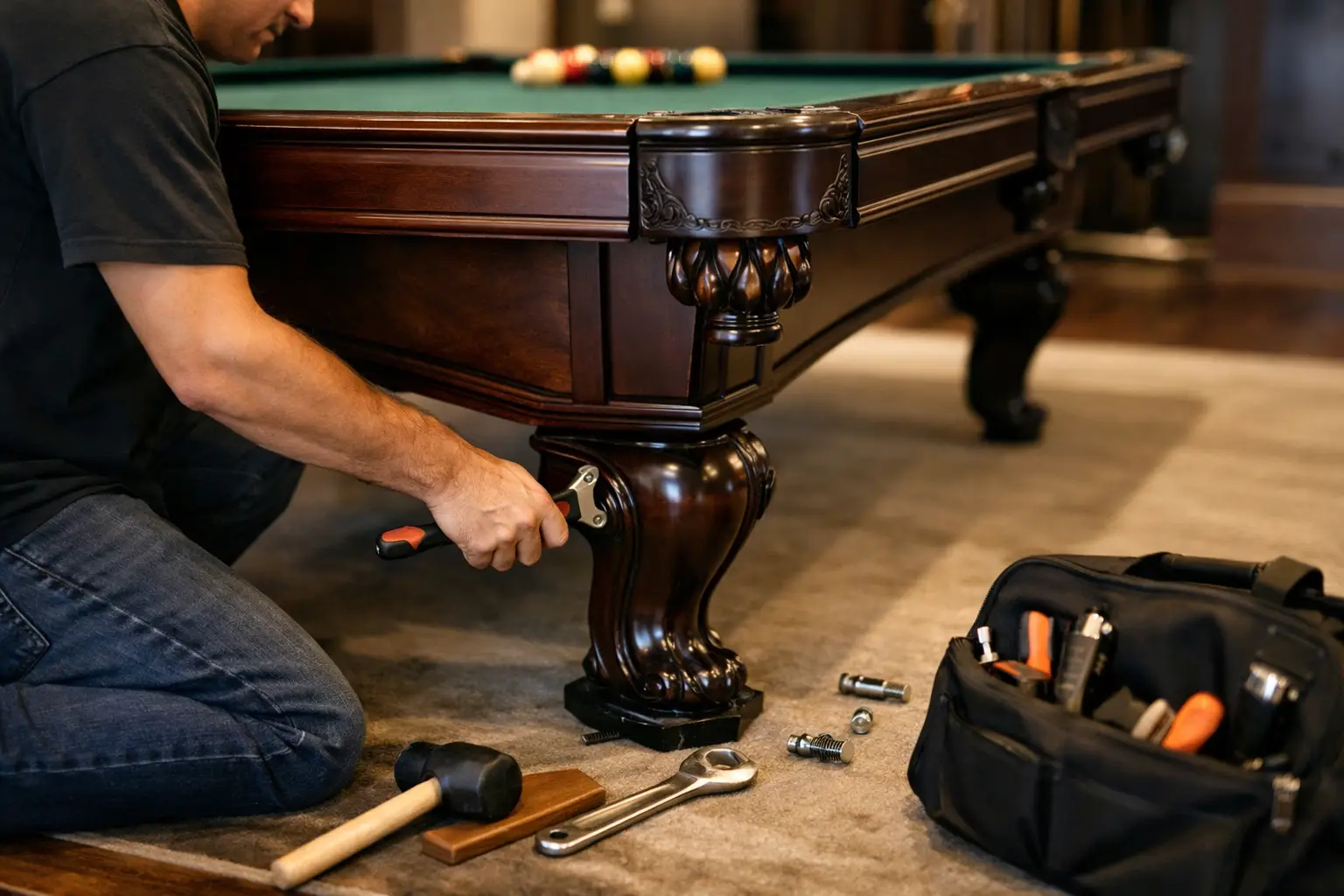
A pool table that rocks, leans, or seems impossible to level may need more than another adjustment. A professional pool table leg repair service addresses the structural problem beneath the cabinet so the table can support its slate correctly and play the way it should. On a slate pool table, the legs are not decorative furniture parts. They carry a heavy, precisely balanced assembly of frame, slate, rails, and hardware.
Ignoring a damaged leg can turn a manageable repair into a larger restoration. As weight shifts through a weakened joint or cracked support, the cabinet can move out of square, seams can become stressed, and the playing surface can lose its true roll. The right repair begins with finding the source of the movement, not simply shimming the table until it looks level.
What Pool Table Leg Damage Looks Like
Leg damage is often easier to feel than to see. You may notice that the table wobbles when someone leans on the rail, that one corner settles under the slate's weight, or that the balls consistently drift despite repeated leveling attempts. A gap at a leg-to-frame joint, loose mounting bolts, split wood, or damaged threaded levelers can all create these symptoms.
Older tables can develop trouble gradually. Seasonal humidity changes, repeated moves, basement moisture, and years of normal use can weaken glue joints or cause wood components to swell and shrink. A hard impact during a move can create a more immediate issue, including a cracked leg, broken mounting plate, stripped fastener, or a frame connection that has pulled loose.
Cosmetic wear and structural damage are not the same thing. Scuffs, chipped finish, and minor veneer loss may affect appearance without affecting play. A leg with a visible crack, a loose pedestal, or movement where it meets the cabinet deserves closer attention because the table's substantial weight is no longer being distributed as intended.
Why Shims Alone Are Not a Repair
A small shim is sometimes part of a proper leveling process, particularly on an uneven floor. It is not a substitute for repairing a leg that is split, unstable, or detached from the frame. Adding material beneath a failing leg can temporarily reduce the wobble while leaving the underlying stress in place.
That distinction matters most on three-piece slate tables. The slates need stable support before they can be leveled with precision. If the cabinet shifts after the slate is adjusted, the seams, wax, cloth, and rail alignment can all be affected. What begins as an attempt to correct a slow roll can become a teardown and re-leveling job.
A professional assessment also separates a leg problem from a floor problem. Some game rooms have settled flooring, soft carpet and padding, or uneven surfaces that require careful setup. In those cases, the legs may be sound and the table can be leveled correctly with appropriate support. If the frame itself is loose or damaged, the repair needs to happen before final leveling.
What a Professional Pool Table Leg Repair Service Involves
A proper repair starts by inspecting the whole support system. The technician checks each leg, the cabinet corners, cross members, mounting points, bolts, brackets, and the condition of the frame around the slate supports. The goal is to identify whether the issue is a failed joint, damaged hardware, compromised wood, a warped cabinet component, or a combination of problems.
Depending on the table's construction and condition, repair may involve reinforcing or rebuilding a joint, replacing stripped or damaged hardware, repairing splits in solid wood, securing mounting plates, or correcting a leg connection that has loosened over time. Some legs can be repaired in place. Others require the table to be disassembled so the weight is removed from the damaged area and the work can be completed without risking the slate.
That is where experienced handling matters. Slate is heavy, brittle at its edges, and difficult to replace. It should not be supported by an unstable cabinet while someone attempts a quick fix underneath. Disassembly allows the frame to be evaluated properly, repaired as needed, and prepared for accurate reassembly.
Once the structure is stable, the table is assembled with attention to slate support, seam condition, rail fit, and final precision leveling. This is the difference between a table that merely stands upright and one that gives you a consistent playing surface. A repaired table should feel solid at the rails and allow balls to roll true across the bed.
Repair, Replacement, or Restoration?
The best option depends on the table, the type of damage, and the owner's goals. A high-quality solid-wood table with a localized loose joint is often well worth repairing. A leg with severe water damage, missing structural material, or a poor past repair may need more extensive rebuilding or replacement.
There is also a practical question of matching. On an older table, a replacement leg that does not match the existing finish, profile, or mounting system can stand out. In some cases, repairing and refinishing the original component preserves the character and value of the table better than installing a mismatched part.
When the table is already apart, owners often choose to handle related work at the same appointment. New cloth, cushion replacement, rail repair, pocket work, and cabinet touch-ups can be more efficient during reassembly than as separate projects later. That does not mean every table needs a full restoration. It means the condition of each component should be considered while access is available.
When to Stop Playing and Call for Help
A table does not need to collapse before it needs attention. Stop using it and arrange service if a leg visibly shifts, a crack is spreading, the cabinet separates at a corner, or the table suddenly will not hold level. Do not let children climb, sit, or lean on the rails when the support system is questionable.
Avoid trying to lift one end of a slate table by the rail or cabinet to inspect a leg. Even a small table can weigh several hundred pounds, and slate adds concentrated weight that can stress the frame if lifted incorrectly. Tightening an accessible bolt may seem harmless, but overtightening hardware in damaged wood can make the repair more difficult.
Photos of the affected area can help describe the issue when booking service, especially if there is a visible crack, missing hardware, or water staining. Still, an on-site inspection is usually needed to determine whether the damage is limited to the leg or has traveled into the frame and slate support structure.
Protecting the Repair Over Time
After a structural repair, keep the table in a stable environment whenever possible. Moisture and major temperature swings are hard on wood, glue joints, cloth, and rubber cushions. If the table is in a basement or room with changing humidity, addressing moisture conditions can help protect the work.
Use the table as a pool table, not a workbench or storage surface. Avoid dragging it across the floor, and never move it assembled to another room or home. A slate table should be professionally disassembled, transported, and reassembled so its legs, frame, rails, and playing surface are protected throughout the move.
TableSmith Installations provides hands-on repair, restoration, relocation, and precision leveling for owners who want their table cared for as valuable game-room equipment. The goal is not just to make a damaged leg look better. It is to restore stable support and the confident, true-playing feel that makes time around the table worthwhile.
If your table has begun to wobble or refuses to stay level, act before the damage reaches the frame or slate. A careful inspection and the right repair can keep a favorite table solid, playable, and ready for the next rack.