
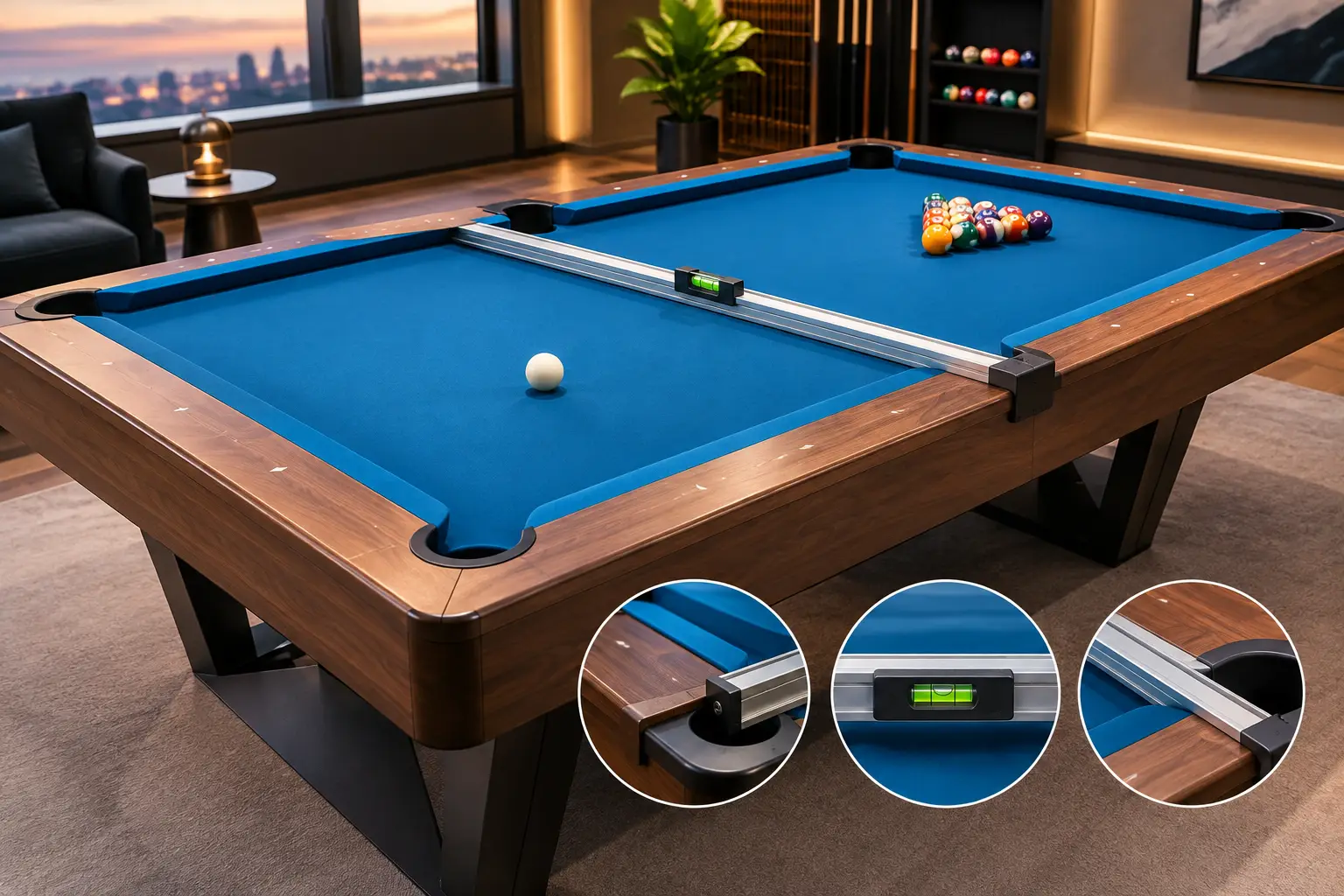
A pool table can look perfectly level and still play wrong. When a bank shot returns short, a ball rattles in a pocket it should have cleared, or the cue ball comes off one cushion differently than another, the issue may be rail alignment. The rails are not decorative trim around the slate. They establish the table’s pocket geometry, hold the cushions in their correct position, and control how the game feels on every shot.
For a homeowner, that means rail work deserves the same care as slate leveling and cloth installation. A table that has been moved, disassembled, stored, or bought used may need more than a quick tightening of a few bolts. Proper alignment is a measured installation process that protects the table and gives players a consistent, honest roll.
What Rail Alignment Controls on a Pool Table
The rail assembly includes the wood rails, rubber cushions, facings at the pocket openings, rail bolts, and often the sights used to aim bank shots. These components work together around the perimeter of the slate. If one rail is pulled too far inward, sits slightly crooked, or is installed at a different height than the others, it changes the playing surface in ways that are easy to feel but difficult to correct after the table is fully assembled.
First, aligned rails keep the cushion nose at the proper relationship to the slate. The cushion nose is the point where the ball makes contact with the rubber. When that contact point is positioned correctly, the ball rebounds at a predictable angle. If the rubber sits too high, too low, or unevenly along the rail, the rebound can become inconsistent. A player may assume their aim is off when the table is actually sending the ball somewhere else.
Alignment also determines pocket opening and shelf depth. The opening between the rail facings needs to be consistent from side to side, while the pocket angles must guide a properly struck ball inward rather than reject it unnecessarily. Tight pockets can be challenging and enjoyable, but tight should be intentional and symmetrical. A pocket that is accidentally narrowed by a shifted rail is not a performance upgrade.
Finally, the rails help maintain the table’s structure. They secure to the slate and frame as designed, helping the whole assembly remain stable through normal play. Loose or unevenly tightened rail bolts can lead to movement, gaps, damaged cloth, and added stress on older wood components.
Why Rail Problems Often Appear After a Move
Most quality pool tables are built to come apart for transport. That does not mean they can be taken apart and reassembled casually. Slate sections, cabinet frames, rails, hardware, and pockets must all return to their proper positions. During a move, bolts can be mixed up, shims can be lost, wood can shift with changes in humidity, and prior shortcuts can become visible.
A rail may also have been removed because of worn cloth or cushion replacement. Refelting is an excellent opportunity to inspect the rail assembly because the cloth is already off and the condition of the rubber, facings, featherstrips, and bolt holes is easier to assess. If the cushions have hardened, separated from the rail, or developed uneven spots, simply stretching new cloth over them will not restore reliable play.
Older tables deserve particular attention. Their rails may have minor warping, stripped bolt inserts, previous repair work, or cushion rubber that no longer responds as it should. In those cases, the right approach depends on the table’s condition. Sometimes careful adjustment and secure reinstallation are enough. Other times, cushion replacement, rail restoration, or hardware repair is the better long-term answer.
Rail Alignment Starts With a Stable, Leveled Foundation
Rails cannot correct a poor slate setup. Before the rail assembly is installed, the cabinet needs to be positioned securely, the frame must be stable, and the slates must be leveled and matched at their seams. A table can be level overall but still have slate seams that affect rolling. Likewise, a table can have excellent slate work but play poorly if the rails are installed carelessly afterward.
The correct order matters. The frame is checked, the slate is leveled precisely, seams are addressed, and the cloth is installed with attention to tension and grain direction. Then the rails are positioned and secured evenly. This gives the installer a reliable foundation for checking rail fit, pocket spacing, and cushion response.
There is a trade-off worth understanding here. Tightening every rail bolt as hard as possible is not a substitute for precision. Excess force can stress components or pull a rail out of its correct position. The goal is even, secure fastening that brings the rails into their intended relationship with the slate, pockets, and each other.
Signs Your Table May Need Rail Service
Some issues point clearly to rail alignment or cushion condition. Others can overlap with leveling, cloth, or slate concerns. A professional inspection is useful because it identifies the actual source instead of treating the symptom.
Pay attention if bank shots react differently from one side of the table to the other, if balls jump slightly when they contact a cushion, or if a rail produces a noticeably dead rebound. Pocket behavior is another clue. Balls that repeatedly rattle at one pocket, hang along one jaw, or fall differently on matching shots may indicate uneven facings or shifted rail geometry.
Physical signs matter, too. Look for gaps between rails and slate, loose rails, cracked wood, torn cloth near the rail edge, hardened rubber, or pocket liners that do not sit correctly. Do not keep tightening loose bolts without knowing why they loosened. A stripped insert, damaged hardware, or misfitted component can get worse when forced.
How Professional Rail Alignment Is Performed
Professional rail work is deliberate because each adjustment affects more than one part of the table. The rails are inspected for straightness, sound wood, secure bolt locations, proper cushion attachment, and condition of the pocket facings. The technician also checks whether the existing rubber remains lively and even across the full length of every cushion.
With the slate already prepared, the rail assembly is placed in its proper position and bolted down in a controlled sequence. Pocket openings are checked for consistency, and the rail sections are brought together without creating uneven joints or visible gaps. The cloth must lie cleanly beneath the rails, with enough tension to look and play right without being pulled unevenly at the pockets.
After installation, the table should be tested rather than simply admired. Straight shots, rail-first shots, and banks reveal different problems. A ball should contact the cushions cleanly, return predictably, and travel without strange hops or dead spots. Small corrections at this stage can make a major difference in the finished table’s playability.
For tables receiving new cushions, this process becomes even more important. Cushion profiles, rubber quality, and facing thickness all influence how a ball responds. The best choice depends on the table’s design and the owner’s expectations. A family game room may prioritize reliable, forgiving play and durability. A serious recreational player may want tighter tolerances and more demanding pocket behavior. The work should suit the table, not force a one-size-fits-all setup.
Protecting the Table Between Services
Once the rails are properly installed, basic care helps them stay that way. Avoid sitting on the rails, placing heavy objects on them, or using them as supports while moving furniture around the game room. Changes in temperature and humidity can affect wood over time, so a reasonably stable indoor environment is kinder to the table than a damp basement or an unconditioned space.
When moving a pool table within a home or to a new address, do not drag it across the floor or attempt to carry it intact. Slate tables are heavy, but their weight is only part of the risk. The rails, frame joints, legs, and slate seams can all be damaged by an improper move. Disassembly, careful transport, and precise reassembly protect both the investment and the way the table plays afterward.
TableSmith Installations approaches rail work as part of the complete setup, not as an afterthought. The goal is a table that looks finished, feels solid, and gives every player a fair response from the cushions and pockets.
If your table has started playing differently after a move, refelt, or years of use, trust what you are seeing on the table. A well-aligned rail system brings back the confidence that the next missed bank was the shot, not the equipment.