
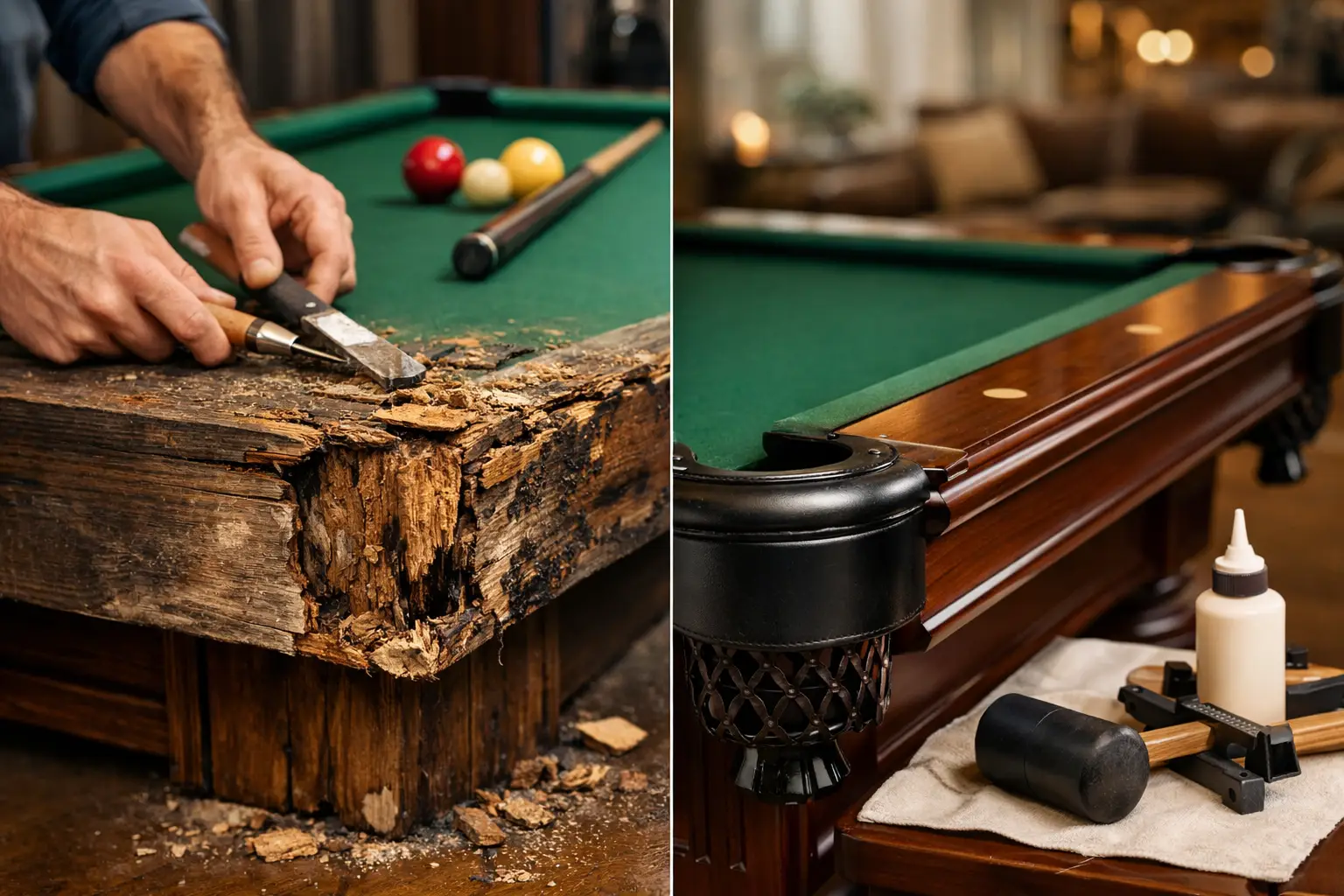
A pool table can look fine from across the room while water is quietly weakening the structure underneath it. Pool table frame water damage repair is not just about removing stains or drying out a cabinet. The frame supports the slate, holds the table square, and keeps the rails and pockets aligned for consistent play. When moisture gets into that structure, a small leak can turn into an expensive setup problem.
Whether the water came from a damp basement, a plumbing leak, a flooded moving truck, or a spill that sat too long, the right response depends on how far the moisture traveled. Acting early gives you the best chance of saving original wood and avoiding slate support issues.
Why water damage affects how a pool table plays
Most residential pool tables combine several materials: a wood cabinet or frame, cross beams, slate, rail assemblies, cushion rubber, cloth, and metal hardware. Slate itself does not absorb water in the way wood does, but it depends on a stable, properly supported frame. If the frame twists, swells, separates, or loses strength, the slate can settle unevenly.
That is when players begin noticing symptoms that seem unrelated to water. Balls may drift on slow shots. A table that was once level may need repeated adjustment. Rails can sit unevenly, pocket openings can look slightly off, and screws may no longer hold as firmly as they should.
The concern is not simply cosmetic. A swollen particleboard or MDF support can lose its ability to carry weight reliably. Solid hardwood frames are often more repairable, but they can still cup, crack, or pull apart at joints after a serious soaking. The construction method, age of the table, and duration of exposure all matter.
First, stop the moisture and avoid a rushed setup
If water exposure is recent, remove the source before doing anything else. Fix the leak, move the table out of standing water if it can be done safely, and improve air circulation in the room. A dehumidifier can help reduce ambient moisture, but it will not reverse swollen composite wood or repair separated joints.
Do not try to move a slate table as one assembled piece because it feels damp or unstable. A typical slate table is heavy, and lifting or dragging it incorrectly can crack the slate, damage the frame further, or injure someone. It should be professionally disassembled before relocation or major structural work.
It is also wise not to tighten every visible bolt or screw immediately. When wet wood changes shape, forcing hardware tighter can split a rail, strip a mounting point, or lock a warped section into a poor position. The table needs to be assessed before anyone attempts to level it or put it back into service.
Signs your pool table frame needs more than drying
Surface moisture and light water spotting are one thing. Structural damage is another. The following conditions usually call for a closer inspection and, in many cases, professional repair:
The cabinet sides are bowed, soft, blistered, or visibly swollen.
Veneer is lifting, cracking, or separating from the underlying material.
Cross beams sag, split, or show dark staining around fasteners and joints.
Rail bolts no longer tighten securely, or the rails sit unevenly on the frame.
The slate has developed new low spots after the table was previously level.
Mold, a persistent musty smell, or corrosion appears beneath the table.
A stain alone does not always mean the frame has failed. On a well-built hardwood table, a limited spill that was dried quickly may only require refinishing or a minor repair. But a basement flood, long-term humidity, or water that reached the underside of the frame deserves more caution. Damage often begins where it is least visible: under the cabinet, at leg connections, and along slate support beams.
How pool table frame water damage repair is evaluated
A proper repair begins with disassembly, not guesswork. The cloth, rails, and slate are removed so the frame can be inspected without the weight of the playing surface hiding the problem. This makes it possible to see whether the table has swollen panels, loose joints, weakened supports, rusted hardware, or damaged leg mounts.
The next question is whether the original structure can be stabilized. On quality solid-wood tables, damaged sections can sometimes be repaired with properly fitted wood, reinforced joints, and careful refinishing. Loose corner blocks, compromised cross members, and minor veneer damage may be repairable without replacing the entire cabinet.
Composite materials require a more conservative approach. Once particleboard has expanded significantly, it rarely returns to its original strength or shape. Sanding the surface may improve its appearance, but it does not restore the load-bearing integrity needed beneath slate. In that situation, replacing affected supports or rebuilding portions of the frame may be the safer option.
The goal is not to make the table merely look dry. It is to restore a flat, rigid foundation that can hold the slate correctly and keep the rails aligned under normal play.
Slate inspection and leveling come after frame work
A table should never be precision leveled over a compromised frame. Leveling shims can compensate for small floor variations, but they are not a cure for sagging beams or water-damaged leg mounts. If the base is changing, the playing surface will keep changing with it.
After structural repairs are complete, the slate can be reinstalled, seams prepared, and the table leveled using accurate measurements. Each slate piece must be supported correctly, with no rocking or pressure points. This is where careful craftsmanship matters most: a table can appear level at one end yet still roll poorly if the slate seams or support points are not right.
Rails, cushions, and cloth may need attention too
Water that reaches the frame may also affect the rail assembly. Rail wood can warp, bolt holes can weaken, and cushion rubber can become inconsistent if it has been exposed to prolonged dampness or temperature swings. Cloth can stain, shrink, develop mildew, or lose its proper stretch.
Sometimes refelting is a practical part of the repair, especially when the table must already be stripped down for frame access. It is also an opportunity to check cushion response and replace worn rubber if the rails no longer play true. Repairing the base while leaving loose rails or poor cushions in place can leave an owner with a table that looks better but still does not perform the way it should.
When repair makes sense and when replacement is wiser
There is no single answer for every table. A family heirloom or a well-made solid-wood table may justify detailed restoration because the materials, design, and long-term value are worth preserving. A newer entry-level table with badly swollen engineered-wood supports may cost more to rebuild correctly than it is worth.
That does not mean the decision is only financial. If a table fits a room perfectly, has sentimental value, or was built with quality slate and rails, targeted structural repair can be worthwhile. On the other hand, if the frame cannot reliably support the slate after water exposure, putting it back together for short-term appearance is not responsible work.
A clear inspection should identify the condition of the cabinet, supports, slate, rails, and hardware separately. That gives the owner useful options instead of a vague recommendation to either save everything or replace everything.
Preventing another moisture problem
Once a table has been repaired or reassembled, keep the room as stable as possible. Avoid placing the table directly beneath plumbing lines, windows known to leak, or areas where water collects after heavy rain. In basements, a working dehumidifier and attention to drainage can protect more than the cloth - they help protect the entire structure.
Use furniture pads or suitable leg protection if moisture can come up through a concrete floor. Check beneath the table occasionally, especially after storms or plumbing work. A quick look at the leg bases and underside of the frame can catch trouble before it reaches the slate supports.
If your table has been exposed to water, do not wait until balls start rolling off line to find out what happened underneath. A careful inspection, structural repair when needed, and precision reassembly can protect the table you invested in and bring back the dependable play your game room deserves.