
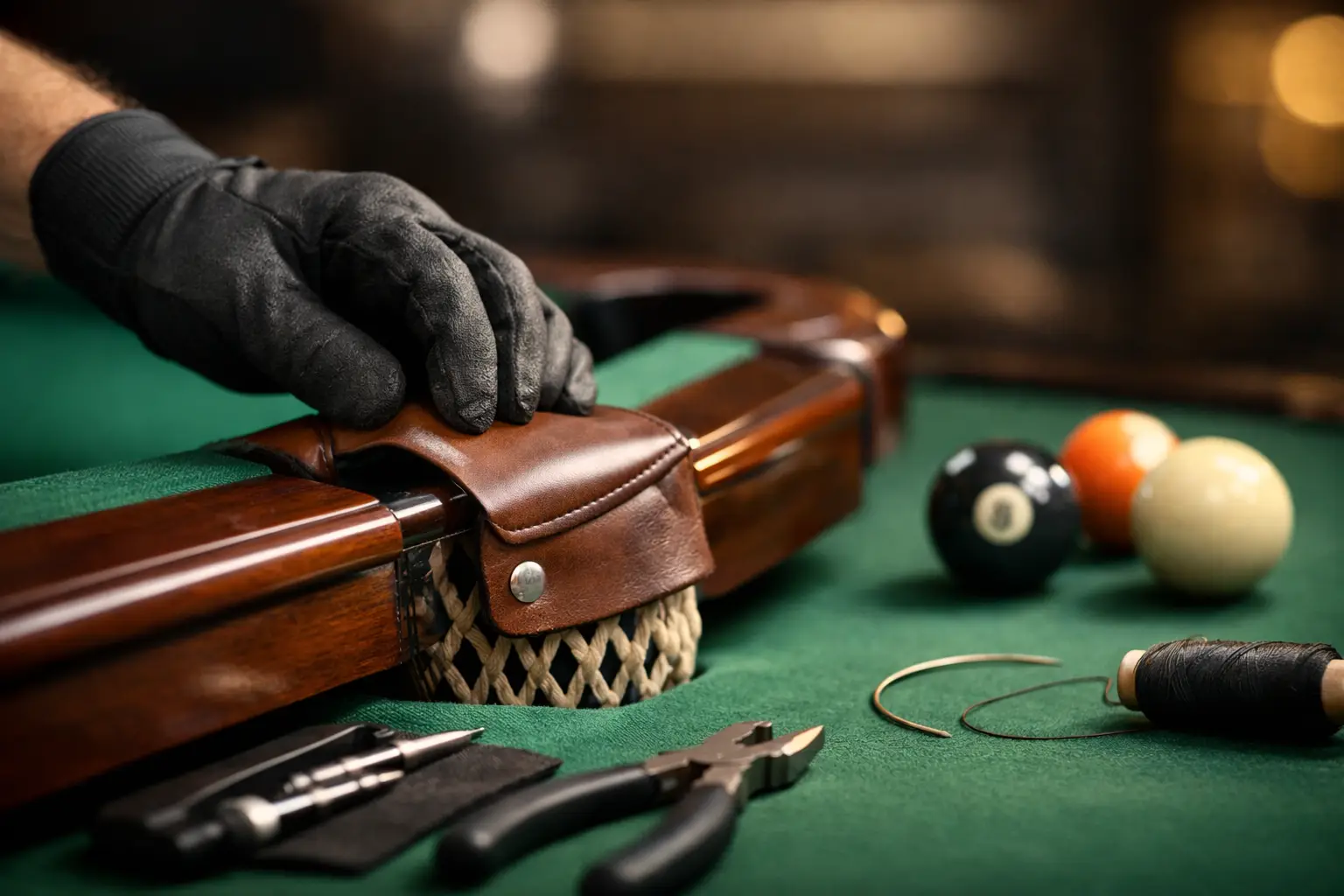
A ball that catches on a pocket liner, drops through a loose net, or bounces back onto the table changes more than the look of your game room. It changes the way the table plays. Knowing how to fix pool table pockets starts with identifying which part has failed: the pocket iron, leather shield, rubber liner, net, mounting hardware, or the rail itself. These pieces work together, and a quick fix in the wrong place can create a pocket that looks acceptable but rejects balls it should accept.
For many owners, pocket repairs are manageable when the issue is limited to a loose liner or worn net. When the problem involves rail removal, cracked pocket castings, damaged facings, or cloth that must be pulled back and reinstalled, the repair becomes more technical. A pool table is precision equipment. Pocket work should protect the rail alignment, cushion geometry, and cloth finish that determine how the table plays.
Start by Finding the Actual Pocket Problem
Before removing anything, inspect all six pockets. Even if only one pocket is causing trouble, the others can tell you whether you are looking at normal wear or a larger installation issue.
Check whether the pocket is loose at the rail, whether the liner is torn or hardened, and whether the opening is the same shape and size as the matching pocket on the opposite side. Look underneath the table for loose screws, separated net stitching, bent brackets, or cracked plastic drop pockets. On leather pockets, examine the leather straps and the stitching where the basket meets the top shield.
A ball returning from the pocket opening is often blamed on the liner, but the cause may be a loose cushion facing, a shifted rail, or an improper pocket angle. If the ball hits a hard edge before it reaches the pocket, replacing the net will not correct the play. That is why the inspection matters.
How to Fix Pool Table Pockets With Loose Hardware
Loose hardware is one of the more straightforward repairs, especially on tables with drop pockets. Start by emptying the pocket and supporting it from below. You do not want the weight of a leather basket or ball return assembly pulling against the rail while you work.
Most pockets attach through screws, bolts, brackets, or a combination of these. Tighten the existing hardware evenly rather than cranking down one fastener at a time. Over-tightening can crack a plastic pocket body, distort a metal iron, or pull a leather shield out of shape.
If a screw will not hold because its hole is stripped, avoid using a larger screw unless you are certain it will not interfere with the rail construction or slate beneath it. A proper repair may require a threaded insert, a new mounting block, or replacement hardware. On older home tables, the original screws may simply be too corroded or worn to reuse.
After tightening, test the pocket by hand. It should sit firmly against the rail without rocking, sagging, or leaving an exposed hard edge at the mouth. Then roll several balls slowly into the opening from different angles. The test is not whether the ball falls eventually. It is whether it enters cleanly without rattling or striking an obstruction.
Replacing Worn Pocket Liners and Shields
Rubber or plastic liners protect the opening of the pocket and soften contact as balls enter. Over time, liners can split, curl, harden, or pull away from the pocket iron. A damaged liner can scratch balls, catch cloth fibers, and make a pocket play unexpectedly tight.
Replacement liners need to match the pocket style and opening. Corner and side pockets are not interchangeable, and decorative leather shield pockets use different components than many modern molded drop pockets. Measure the existing opening and compare the profile of the old liner before ordering a replacement.
On some tables, the liner is secured with small screws or staples. On others, it fits tightly over the pocket iron or is held in place as the rail assembly is installed. Remove the old liner carefully so you can see how the original was fitted. If cloth is tucked beneath the liner, avoid pulling it free. A torn or stretched cloth edge will require more than a pocket replacement to correct.
When installing the new liner, make sure its edge is smooth and even around the entire opening. There should be no raised lip facing the playing surface. A raised lip can deflect a slowly rolling ball and make a properly aimed shot feel unfair.
Repairing Leather Drop Pockets and Nets
Leather pockets add character to a traditional table, but they carry the weight of every ball dropped into them. The leather can dry out, stretch, crack around fasteners, or separate at the stitched seams. Nets can tear at the bottom, sag excessively, or pull away from the leather shield.
Minor leather dryness can sometimes be addressed with a leather conditioner designed for finished leather. Use it sparingly and keep product away from the cloth, rails, and rubber cushions. Conditioner can improve flexibility, but it cannot restore leather that has cracked through or become weak around mounting points.
A loose or torn net may be repairable if the leather shield and pocket iron are still sound. Re-stitching can work for a small seam failure, but the thread, needle, and stitch pattern need to support the weight of a full pocket of balls. A weak repair often fails again at the worst moment, sending balls onto the floor.
If the leather itself is splitting, replacement is usually the better value. Trying to reinforce severely worn leather with glue, staples, or patches tends to create a bulky pocket edge and a repair that does not last. Matching all six pockets is also worth considering when the existing set is visibly faded or worn. Replacing only one leather pocket may leave the table looking uneven.
When a Pocket Problem Is Really a Rail Problem
This is where a seemingly small repair can become a precision job. The pocket opening is formed by the rail ends, cushion facings, and pocket components. If a rail is loose, the nose of the cushion may sit too high, too low, or out of line with the next rail. The ball may rattle, reject, or hit exposed wood or metal.
Signs of a rail-related issue include a pocket that is noticeably tighter than the matching pocket, cloth pulling away near the opening, a separated cushion facing, or a rail that moves when pressed. Do not force screws through the top rail to stop movement. That can damage the rail cap, interfere with the slate attachment, and make a proper repair more difficult later.
Correcting rail and pocket geometry may require removing the rail assembly, replacing facings, rebuilding a pocket subrail, or refelting the rails. The work needs accurate measurements and careful reassembly because even a small change at the pocket can affect shot acceptance. Serious players notice these differences immediately, but casual players benefit from them too. A table should reward a clean shot, not reject it because a repair altered the opening.
Avoid These Common Pocket Repair Shortcuts
Some temporary fixes cause more trouble than the original damage. Adhesive alone is rarely a dependable solution for a loose pocket liner or leather shield because pocket components flex with regular use. Staples placed through visible leather can tear the material further and may leave sharp edges. Household screws that are too long can reach places they should not.
Avoid lubricants on pocket liners, cloth, or cushions. A pocket should not need to be slippery for balls to fall. If balls are hanging up, the issue is usually a damaged liner, improper geometry, debris, or a loose component.
It is also wise to avoid removing one rail without understanding how the table is constructed. On many slate tables, rail bolts, cloth tension, pocket irons, and featherstrips all interact. Pulling a rail apart without a plan can tear cloth or create alignment problems that were not there before.
Know When to Bring in a Table Technician
Call for professional repair when a pocket is cracked at the rail, the rail is loose, the cushion facing has separated, the cloth is damaged around the opening, or the pocket shape has changed. Those conditions can affect play across more than one area of the table.
A trained technician can inspect the pocket components while checking rail alignment, cushion response, cloth condition, and level. That broader view matters after a move, during a refelt, or when restoring an older table. TableSmith Installations handles pocket and rail concerns as part of the table's overall playing condition, not as an isolated cosmetic repair.
Your pockets should hold balls securely, present a clean opening, and accept well-played shots consistently. Repair them carefully, and every rack will feel more like the table was meant to play.