
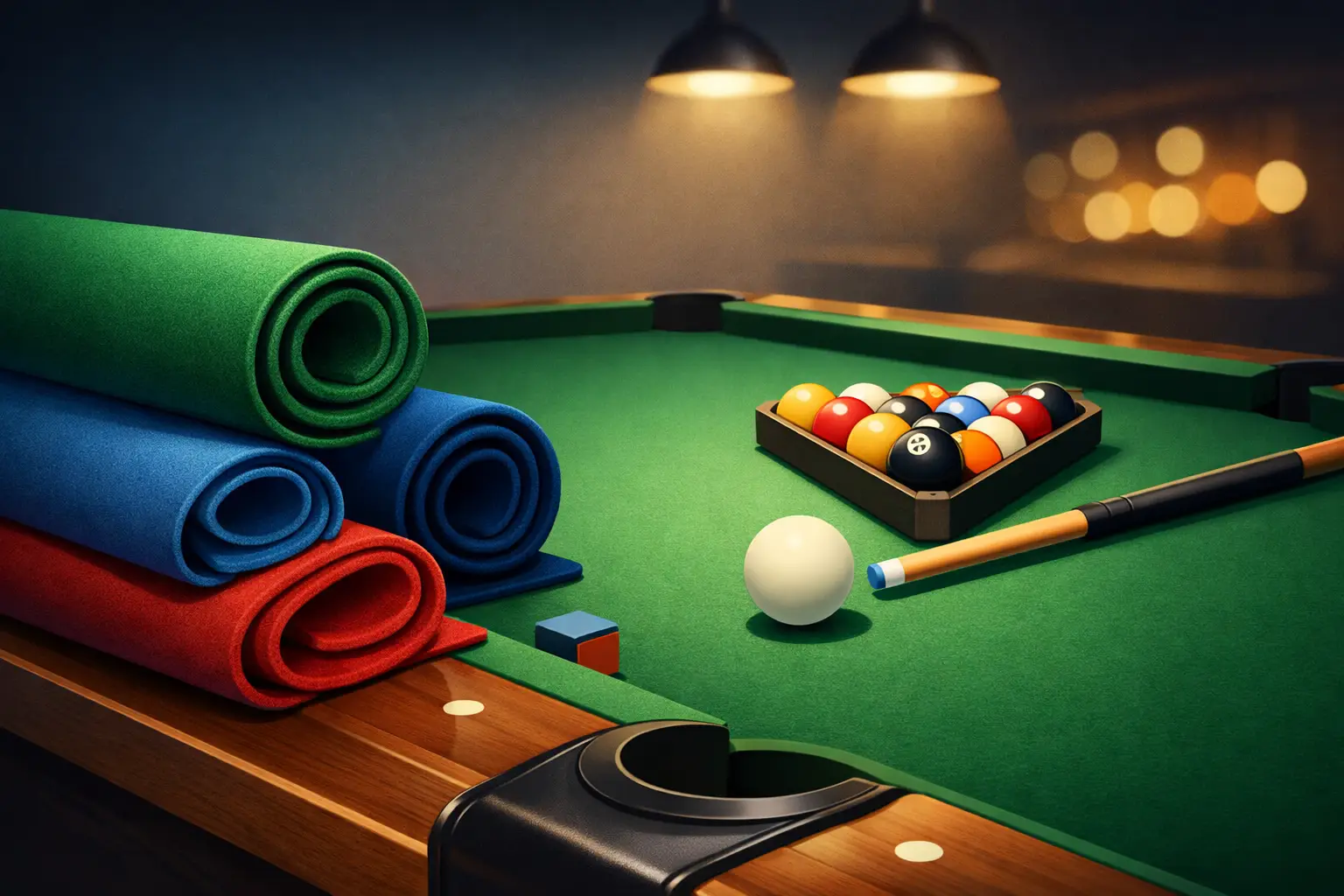
A pool table can look perfectly fine and still play poorly because of the cloth. A slow, fuzzy surface can make every shot feel heavy. Cloth that is stretched unevenly can pull a rolling ball off line. The best felt for pool table owners is not simply the most expensive option or the color that looks sharp in a game room. It is the cloth that fits the way the table is used, is installed correctly, and works with a level slate and sound rails.
At TableSmith Installations, we treat refelting as performance work, not a cosmetic cover-up. New cloth should make your table look refreshed, but it should also give you a clean roll, predictable speed, and a surface that holds up to the people playing on it.
Best Felt for Pool Table Use Starts With How You Play
The first question is not, “What color do I want?” It is, “What do I expect from this table?” A family table that hosts weekend games, kids learning pool, and the occasional gathering has different needs than a table used by a committed player practicing position control.
Most residential pool tables do well with a quality woolen cloth. This is the traditional material many people call felt. It has a slightly thicker, softer texture and a slower pace than tournament-style cloth. It is forgiving, durable, and a practical choice for a busy home game room. It also tends to be more tolerant of casual use, including frequent racking and less-than-perfect cue handling.
Worsted wool cloth is the step up for players who care about speed and accuracy. Instead of having a fuzzy nap, it has a tightly woven, smooth finish. Balls roll faster and more consistently, and players can use spin with greater precision. It is common on serious home tables, league tables, and tournament equipment.
Neither choice is automatically right for every table. A fast worsted cloth on a table with worn cushions, loose rails, or an uneven slate can expose every underlying problem. A durable woolen cloth may be the better fit for a family space where easy care matters more than tournament speed.
Woolen Cloth vs. Worsted Cloth
Woolen cloth: practical and forgiving
Woolen cloth is often the sensible choice for recreational play. Its nap gives it a familiar, slightly slower roll that many casual players enjoy. It generally costs less than premium worsted material and comes in many colors, making it useful for homeowners restoring an older table or coordinating a game room.
The trade-off is performance. The fuzzy surface creates more resistance, so balls travel more slowly and may show a little more variation in their path than they would on a smooth woven cloth. Over time, woolen cloth can also develop tracks in heavily used areas, especially near the rack end and along common shot lines.
For a table used primarily for relaxed games, woolen cloth provides good value. It is not a lesser choice when it matches the table’s purpose.
Worsted cloth: faster, cleaner, and more precise
Worsted cloth is woven from combed wool fibers that lie in a more uniform direction. The result is a tight, smooth playing surface with less friction. Balls roll farther with the same stroke, and the table responds more consistently to English, stop shots, and long straight shots.
This cloth is a strong choice for billiards enthusiasts, league players, and homeowners who want their table to play closer to a commercial or tournament setup. It also resists pilling better than typical woolen material, so it can retain a cleaner appearance with proper care.
The trade-off is that it asks more of the player and the table. The speed can surprise someone accustomed to traditional felt. More importantly, poor installation shows quickly. If the cloth is not tensioned properly, or the slate seams and level are not addressed first, a premium cloth will not correct the problem.
Cloth Weight and Weave Matter More Than Marketing Names
Cloth is often described by weight, but weight alone does not tell the full story. A heavier woolen cloth may offer durability, while a tightly woven worsted cloth can still play much faster at a lower apparent weight. The fiber quality, weave, finish, and installation all affect the result.
For most homeowners, it is more useful to choose by playing goal than by trying to compare labels. If you want a traditional home-table feel and strong everyday durability, select a reputable woolen cloth. If you want a quick, true surface for regular practice and more demanding play, choose worsted wool.
Avoid treating inexpensive, generic felt as a bargain if the table is worth preserving. Thin cloth may stretch inconsistently, wear out early, and reveal imperfections in the slate beneath it. Replacing cheap cloth twice is rarely the better value. A good cloth, properly fitted, protects the playing surface and gives you a more satisfying table every time you rack up.
Color Is a Playability Decision Too
Tournament green remains popular because it is easy on the eyes and makes balls easy to track. Traditional green, blue, burgundy, charcoal, and black are common choices for home tables. The right color depends on the room, lighting, and how often the table is played.
Very dark cloth can look dramatic, but it may show chalk dust, lint, and light-colored pet hair more readily. Bright colors can make a game room feel personal and modern, although some players find intense shades distracting during long sessions. Blue is a popular middle ground because it offers strong ball visibility and a clean contemporary look.
Before selecting cloth by a small sample alone, consider the rails, wall color, overhead lighting, and furniture around the table. A cloth color should work in the room, but you should still be able to see the edge of the object ball and cue ball clearly.
Refelting Is Also the Right Time to Inspect the Table
New cloth creates an opportunity to address the parts you cannot see once the table is assembled. The old cloth has to come off before a technician can inspect slate seams, backing, rail hardware, pocket liners, and cushion condition.
If a ball rolls off after refelting, the problem may not be the cloth at all. Slate can shift during a move, settle over time, or have seams that need attention. A frame may need adjustment. Rail bolts may be loose, or cushions may have hardened and lost their rebound. Covering these issues with new material only delays the repair.
Professional refelting should include careful slate leveling and proper seam preparation before the new cloth is installed. The cloth is then stretched evenly across the bed and secured so it stays tight without creating distortion. Rail cloth must be fitted with equal attention, especially around pocket openings, where poor cuts or loose work can affect both appearance and ball action.
This is why a table should not be refelted like a piece of furniture being reupholstered. Slate is heavy, rails have to align correctly, and a small error in setup can become obvious during play.
Signs Your Pool Table Cloth Is Due for Replacement
Visible wear is the obvious sign, but it is not the only one. Fraying near pockets, tears, burns, and thin spots are clear reasons to replace cloth. So are persistent stains that brushing cannot remove.
Pay attention to how the table plays. If balls seem to drag, roll inconsistently through the center of the table, or pick up lint and chalk constantly, worn cloth may be part of the issue. If the fabric has become loose enough to wrinkle or ripple, it needs attention. A table that has been moved should also be evaluated before assuming the existing cloth can simply be reused.
Sometimes the cloth is still serviceable, but a table owner wants a new color, a faster playing surface, or a full restoration after buying a used table. That is a good time to inspect the cushions and level as well, rather than treating the cloth as an isolated update.
Care That Helps New Cloth Last
A quality cloth will last longer when it is kept clean and protected. Use a purpose-made billiard brush gently, brushing from the head end toward the foot end. Vacuuming can be useful only with a low-suction upholstery attachment and a light touch. Aggressive vacuuming can pull at the weave or lift cloth around pocket edges.
Keep drinks away from the rails, avoid placing heavy items on the table, and use a fitted cover when the table is not in use. Chalk carefully and wipe cue shafts clean so dirt does not transfer to the cloth. If a spill happens, blot it immediately rather than rubbing it deeper into the fibers.
The right cloth gives your table its personality: traditional and forgiving, or quick and precise. Choose for the way you actually play, then have it installed on a slate surface that has been checked, leveled, and prepared to do the cloth justice.